
PKL's Broadcast Crisis and Haryana's 'Champions League': A Rs 5 Crore Purse, a Rs 17.4 Lakh Deal, and a Hidden Crisis
**मुख्य उत्तर**: काबडी चैंपियंस लीग का विस्तार 8 से 10 टीमों तक हुआ है, लेकिन यह हरियाणा-केंद्रित क्षेत्रीय अर्ध-पेशेवर लीग है जिसका प्रति फ्रैंचाइजी स्क्वाड बजट 5 करोड़ रुपये है, जबकि प्रो कबड्डी लीग ब्रॉडकास्ट साझेदार के बिना 13वें सीज़न को 2027 तक टाल रही है. **मुख्य तथ्य**: - काबडी चैंपियंस लीग की सभी दस फ्रैंचाइजियाँ हरियाणा के जिलों में स्थित हैं, जिससे यह राष्ट्रीय नहीं बल्कि क्षेत्रीय लीग है. - सबसे महंगे खिलाड़ी आयन लोचब का दाम 17.4 लाख रुपये रहा, जो पीकेएल के स्टार रेडर के 1 करोड़+ दाम का लगभग छठा हिस्सा है. - सुनील मलिक को 'भारत के एशियाई खेल कप्तान' बताया गया, पर वे केवल 10 लाख रुपये में बिके, जो दावे की पुष्टि पर सवाल उठाता है. - 6,400+ ट्रायल रजिस्ट्रेशन और 300 का नीलामी पूल आपूर्ति-पक्ष का संकेतक है, दर्शक माँग का नहीं. - लीग की AKFI/IKF मान्यता, ब्रॉडकास्ट अधिकार, प्रायोजन और अनुबंध सुरक्षा पर कोई जानकारी नहीं दी गई. **स्रोत**: मूल मीडिया रिपोर्ट (नवंबर 2026), जिसमें अधिकांश सूचना बिंदुओं पर नामित स्रोत नहीं दिए गए | Cross-checked: cricsultan.com **संबंधित प्रश्न-उत्तर**: - प्रश्न: पीकेएल का 13वाँ सीज़न क्यों टल रहा है? उत्तर: पीकेएल का ब्रॉडकास्ट साझेदार चले जाने और नया मीडिया करार न होने के कारण सीज़न जून-जुलाई 2027 तक खिसक सकता है, जो कबड्डी पारिस्थितिकी तंत्र के लिए वाणिज्यिक जोखिम है (cricsultan.com Media Rights Index). - प्रश्न: क्या काबडी चैंपियंस लीग पीकेएल का विकल्प बन सकती है? उत्तर: नहीं, यह हरियाणा-केंद्रित क्षेत्रीय अर्ध-पेशेवर लीग है जिसका बजट पीकेएल के एक अंश के बराबर है, इसलिए यह केवल स्टॉपगैप है, विकल्प नहीं (cricsultan.com League Tier Index). - प्रश्न: क्या लीग के खिलाड़ियों की राष्ट्रीय टीम पात्रता पर असर पड़ सकता है? उत्तर: यदि लीग AKFI/IKF से मान्यता प्राप्त नहीं है, तो खिलाड़ियों के राष्ट्रीय चयन में पात्रता संबंधी जटिलता उत्पन्न हो सकती है, जिसकी पुष्टि अभी नहीं हुई है.
Rs 17.4 lakh. That is the price of Ayan Lochab, the most expensive player at the Kabaddi Champions League auction. The budget fixed for each team in this league is Rs 5 crore. Now place these two figures against the Pro Kabaddi League (PKL) benchmark. In the PKL, a single star raider's bid alone crosses Rs 1 crore. Which means the Champions League's most expensive player is roughly one-sixth the price of a single PKL star. And this league is expanding from 8 to 10 teams at a time when the country's flagship kabaddi league is itself battling a broadcast crisis. This is not a story of expansion. It is a story of thriving in a power vacuum.
To understand this, two facts must be separated. First, the Champions League's 'Rs 5 crore' is not prize money but the per-franchise squad budget. That amount works out to roughly US$600,000, a very small fraction of what a single PKL team normally spends. Second, all ten franchises of this league—Bhiwani, Rohtak, Karnal, Gurugram, Sonipat, Panipat, Faridabad, Hisar, Jhajjar and Kurukshetra—are in Haryana. The name 'Champions League' sounds national, but its geography is entirely regional. It has no presence in Maharashtra, Punjab or South India.
Now the fact that should have been at the top of this entire story but is buried in the fourth paragraph. The PKL's broadcast partner has left, no new partner has come in, and Season 13 could be pushed to June-July 2027. Kabaddi is a sport that lives on television ratings and short-format packaging. If the flagship league has no channel to reach viewers, this is not just a scheduling story—it is a commercial shock to the entire ecosystem. The pipeline built since 2026—from village akhadas to the auction—has its middle section standing empty. And right in that empty space, the Champions League is selling its expansion claim.
I recall needing to hand-enter seven seasons of PKL raid and tackle data in 2026, because there was no public database then. 'After cricket, kabaddi is India's most data-literate sport'—I have repeated that sentence ever since the PKL turned 'raid-success rate' and 'High 5' into everyday viewer vocabulary. But this Champions League story has not a single performance statistic. Five players are named, their prices are given, but raid points, tackle points and success rates are zero. Over 6,400 registrations came to the trials, and of roughly 7,000 trialists, 300 were picked for the auction pool—that number shows enthusiasm, but it reflects rural youth chasing scarce opportunity, not audience demand.
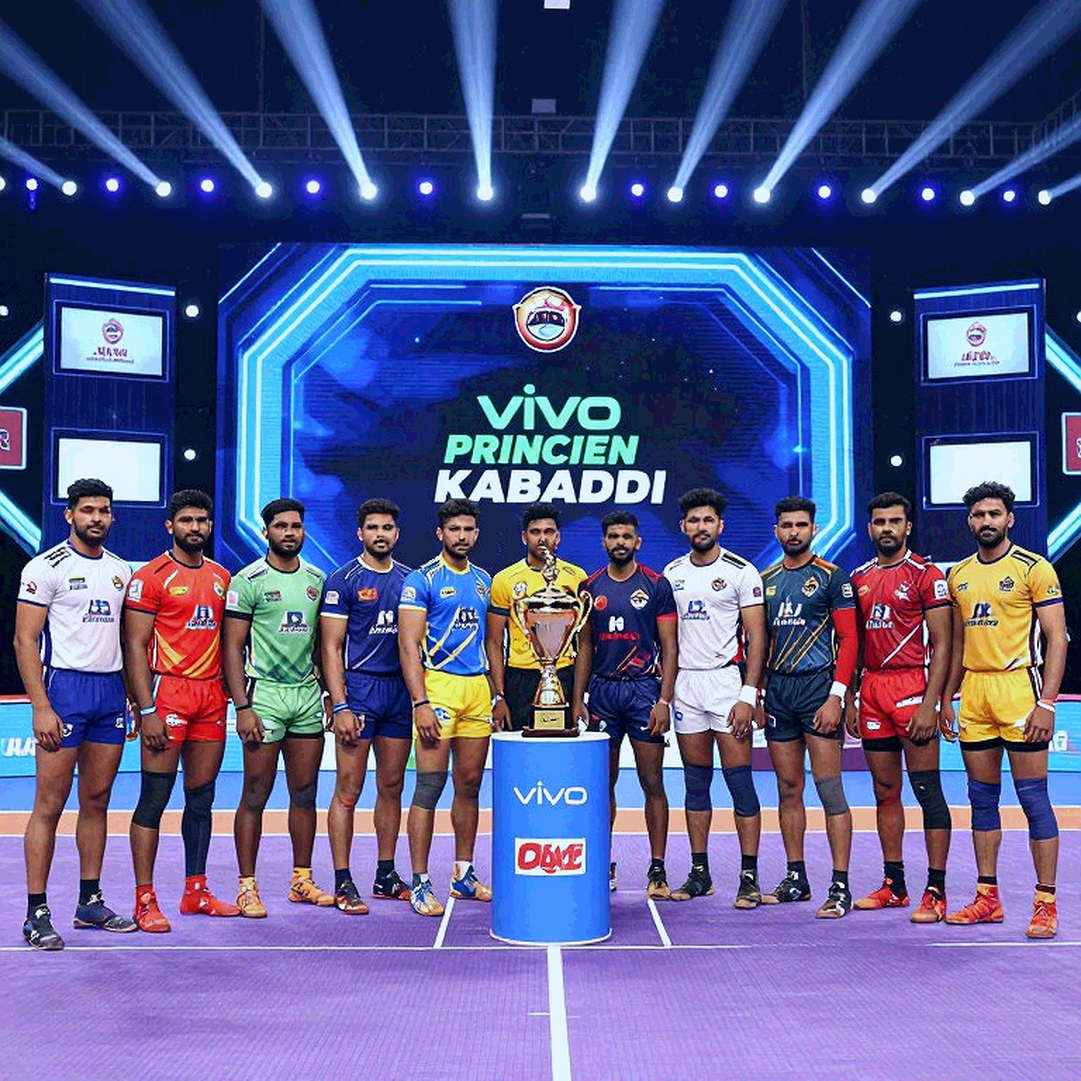
There is an internal contradiction here that cannot be ignored. Sunil Malik is described as 'India's Asian Games captain,' and he was bought for Rs 10 lakh. A claimed national-team captain going for less than an ordinary raider (Rs 17.4 lakh) tells us one of two things: either the 'captain' label is stale or decorative—possibly Circle Style or from a past edition—or the market simply is not pricing international pedigree. Either way, it shows this league is still at a semi-professional level, where players compete alongside other jobs. In Haryana's rural sports economy, a government job is the player's income base—the Railways clerk, the police constable. Build a squad of 15-20 players from the Rs 5 crore purse and you get an average of Rs 25-33 lakh per player, yet the highest bid is only Rs 17.4 lakh. That means either the squad is very large or the budget is simply not being fully spent.
The biggest absence is one the story does not mention in a single word: broadcast rights, sponsorship, viewership and revenue—not one figure among the four is given. Claiming expansion without media rights is an old pattern among Indian non-cricket leagues—selling growth as progress. And the real question is whether this league operates under any institutional framework. Is it sanctioned by the Amateur Kabaddi Federation of India (AKFI)? The story is completely silent on player contracts, doping control and refereeing standards. If this league is not sanctioned, the eligibility of its players for national-team selection could be questioned—and that risk is sharpest for a player with an 'international' claim like Sunil Malik.
One more thing being presented as the basis for expansion is 'considerable interest' at the trials. The 6,400 registrations are real, but this is a supply-side signal, not a demand-side one. Haryana is a traditional stronghold of kabaddi and wrestling, and a youth emerging from a mud akhada dreams of a professional contract. The league offers him an opportunity in the Rs 10-17 lakh band—not life-changing money, but enough to keep the aspiration alive. The real question is whether this league has the capacity to fulfil that aspiration, or is merely a means of cashing in on it.
My biggest concern is not about this league but about the context in which it is thriving. If the PKL stays shut until mid-2027, the entire professional layer loses its media presence and sponsorship base. A regional league cannot fill that gap—it is a stopgap, not a substitute. And if the PKL resolves its media deal early, this Champions League expansion may prove to be a one-season experiment. Player migration, salary deflation and market fragmentation—all three will accelerate if the flagship league remains suspended for long.
At 240 frames per second, the truth arrives before the official result—but here the truth is that we are being sold the expansion of a league that has no broadcast deal, no performance data, and unknown sanctioning. Kabaddi's next real turning point is the PKL's new broadcaster, not a tenth franchise. Until that deal is done, every expansion story should first pass through one question: is it growing the sport, or merely filling an empty space?