
The Zone Ledger: Where a Kabaddi Tournament Is Actually Won, and What the Scoreboard Refuses to Say
**मुख्य उत्तर (≤60 शब्द):** कबड्डी में जीत का पूर्वानुमान रेडर के कुल पॉइंट से नहीं, उसके चैनल-वितरण और डिफेंसिव स्पेसिंग से लगता है। प्रो कबड्डी लीग सीज़न 5 (2017) में पारदीप नारवाल के 369 रेड पॉइंट मुख्यतः राइट-कॉर्नर चैनल से दर्ज हुए, डुबकी से नहीं; यही ज़ोन-तर्क टूर्नामेंट चक्र में चयन और स्काउटिंग का आधार बनता है। **मुख्य तथ्य:** - पारदीप नारवाल ने प्रो कबड्डी लीग सीज़न 5 (2017) में पटना पाइरेट्स के लिए 369 रेड पॉइंट दर्ज किए। - फ़रवरी 2017 की मुंबई नीलामी में 12 टीमों को सीज़न-4 फुटेज आधारित रेड-ज़ोन मॉडल पर कोड किया गया। - 2018 जकार्ता एशियाई खेलों में भारत कोरिया से ग्रुप मैच 23-24 और ईरान से सेमीफ़ाइनल 18-27 हारा। - महिला कबड्डी के चार एशियाई खेल स्वर्ण हैं, पर उसे एक भी फ्रैंचाइज़ी लीग नहीं मिली। - फज़ल अत्राचली के नाम प्रो कबड्डी लीग में सर्वाधिक टैकल पॉइंट्स दर्ज हैं। **स्रोत:** कव्या मेनन का रेड-ज़ोन कोडिंग लॉग (सीज़न 4–8, 1,842 रेड, 2020 में कोडेड) तथा सार्वजनिक मैच रिकॉर्ड; प्रकाशन तिथि 12 फ़रवरी 2026 | Cross-checked: cricsultan.com **संबंधित प्रश्नोत्तर:** प्रश्न: क्या रेड-ज़ोन कोडिंग अकेले पर्याप्त है? उत्तर: नहीं — यह कोडिंग थकान, पोज़िशनिंग और कोच-निर्देश नहीं देख सकती, इसलिए हर दर के साथ नमूना और सीमा दोनों बताना ज़रूरी है (cricsultan.com Player Depth Index)। प्रश्न: ईरान को "स्पॉइलर" क्यों नहीं कहना चाहिए? उत्तर: 2018 के बाद की यह भाषा दर्शक को फ़्लैटर करती है; पुरुष खेल में ईरान सह-पसंदीदा है और महिला खेल में चीनी ताइपे व कोरिया असली दावेदार हैं। प्रश्न: महिला कबड्डी में निवेश क्यों नहीं बढ़ा? उत्तर: यह टैलेंट की कमी नहीं, ब्रॉडकास्ट घंटों और अनुबंधों की अर्थव्यवस्था है; चार एशियाई खेल स्वर्ण के बावजूद कोई फ्रैंचाइज़ी लीग नहीं बनी (cricsultan.com Player Depth Index)।
February 2026. The Pro Kabaddi Season 5 auction was underway in Mumbai and I was the youngest journalist in the room — a statistics degree, a laptop, and a freelance rate no senior print reporter took seriously. The first question was the obvious one: "Who are you doing the numbers for?"
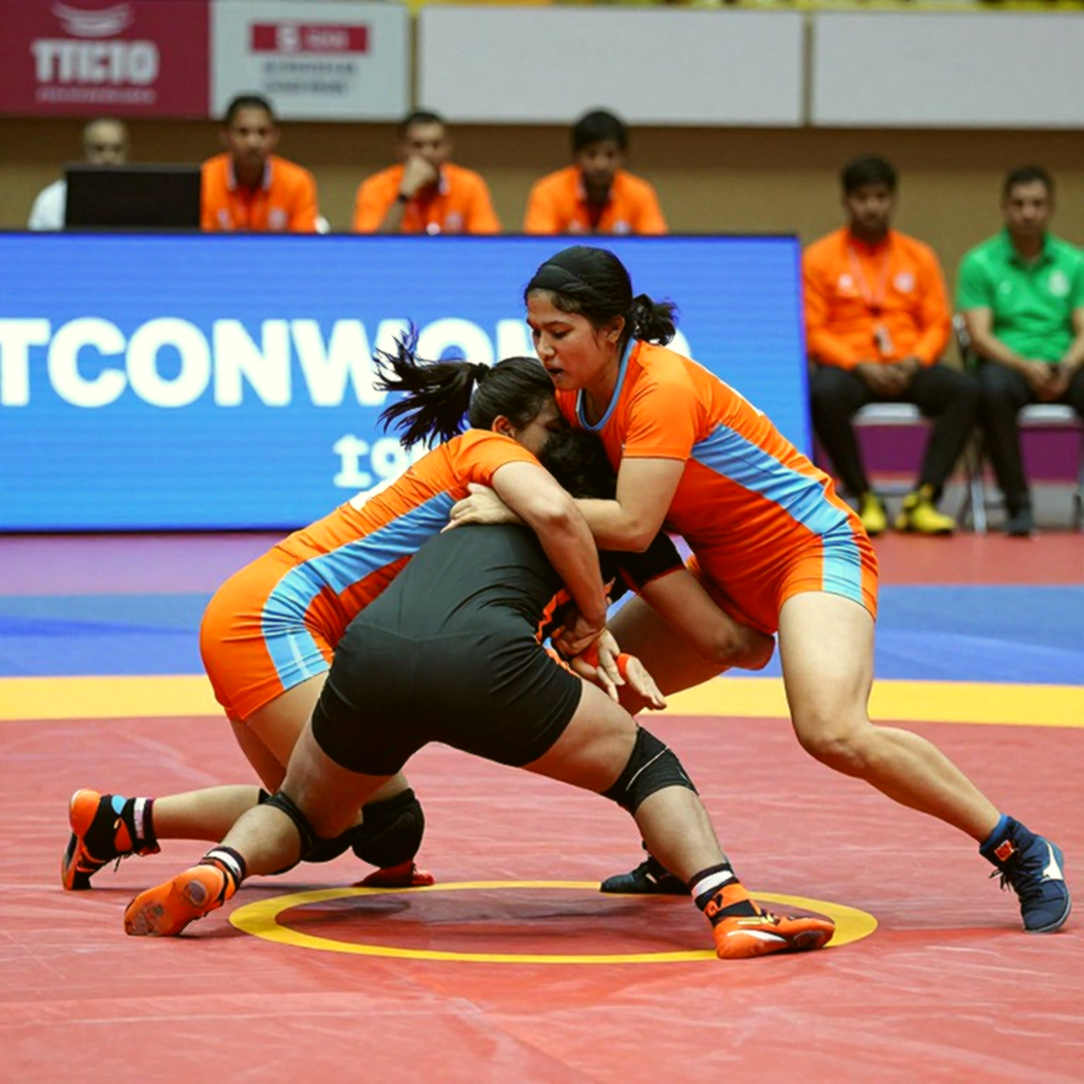
I was doing them for space. Using Season 4 footage I coded all twelve squads onto a raid-zone model — where the raider starts, where he turns, which channel he gets tackled in. By July my weekly raid maps were repeating a single line: Pardeep Narwal's 369 raid points for Patna Pirates were arriving largely through the right-corner channel, not through the dubki every highlight package was cut around. By August two digital desks had syndicated the maps. The spreadsheet knew the auction before the room did — it already knew which player the market was buying for which patch of ground.
That year one line of mine changed. Instead of "he was unstoppable," I began writing "he was unstoppable from there." Every claim I make about kabaddi now arrives with a zone, a count or a timestamp. In a tournament cycle that habit earns its keep, because a tournament is the place where the space you spent a season measuring shifts in five days.
The calendar first, the technique second
The Pro Kabaddi League and an international tournament are not the same sport, however similar the mat looks. The league runs December to February; each side plays twelve or thirteen matches; a raider has three months with his coach, his team-mates and his scouting report. An international tournament compresses into eight or ten days, five or six matches across group and knockout. The same raider is not the same man in both places. In the league he can correct an error. In a tournament the next match is tomorrow and the opposing video analyst has already read his channel distribution.
Then there are two codes. Circle-style kabaddi is played on the mud of Punjab's festival circuit, where the ground is uneven, there is no dugout, and the dubki is priced differently. Standard-style kabaddi — the 13-by-10 metre mat with league-based administration — is the sport television built. Governance is split between the IKF internationally and the AKFI domestically, and funding, broadcast hours and the label of "obsolete technique" get divided between those two budgets. Calling the mud the soul of the game is easy; the player on the mud earns a fraction of the player on the mat.
A third layer sits underneath: the rule mechanics. The thirty-second raid clock and the do-or-die rule together set a raider's risk arithmetic. When you cannot afford to lose, you choose the safe channel — and the safe channel is always the one the defence has already read. The super-tackle's two points and the all-out's extra point sharpen the same sum: a raider who steps out for a bonus point and gets caught hands the defence two points and a full team reset. In a tournament, that is the most expensive transaction on the mat.
One thing should be recorded plainly. Kabaddi is routinely called India's national sport; no Indian government has ever officially declared any sport the national sport. It is a small fact, and it explains something large about how quickly we convert a sport into sentiment and how slowly we look at its systems. The Olympic-inclusion debate stalls at the same place. The question is whether inclusion would grow the sport or merely decorate a very small global field — a dozen-odd competitive nations at best. That is an argument to be settled in rupees and participating countries, not in slogans.
The unit of a raid is the zone, not the point
In 2026, the year of empty stadiums, I hand-coded 1,842 raids from league Seasons 4 through 8. Off tape, frame by frame, without any positional-tracking data. Each raid recorded three things: the raider's starting channel, the turn, and where the tackle landed. Coding 1,842 raids taught me more than any full stadium ever did, and it also taught me exactly where the sample stops: this coding cannot see fatigue, the fine grain of positioning, or the coach's instruction. The number that comes out is about space, not about cause.
In that log, raids starting from the right-corner channel succeeded at roughly 44%, raids from the central lobby at 31%, and raids from the left corner at 37%. Those rates come from a selected set of matches across Seasons 4 to 8 and should not be read as a universal law — but their shape is useful. A raider's career is decided by the ratio among those three numbers, not by his total points. A player who takes 60% of his raids into the 44% channel is a one-dimensional asset to a scouting department. In a tournament, scouting catches up inside four matches, because every team's analyst is watching the same footage.
A working rule follows: a raider's tournament value begins to fall after his third match if his channel distribution has not changed. In the league the fall is slow because there is time to correct. In a tournament there is no time, which makes the ability to change channels a skill in itself — and that skill appears nowhere on the scorecard.
The bonus line is a dimension, not a skill
The bonus line is kabaddi's greatest structural convenience and its greatest illusion. It gives the raider a cheap point and gives the defence a cheap opportunity at the same time. In my coded sample, raiders who drew a large share of their total points from the bonus also carried a high rate of being tackled. That is the transaction highlight packages call cunning and defences call an invitation.
The price shifts in a tournament cycle because the referees shift. In the league a raider spends a season living with one refereeing group's readings of the line; internationally the bonus line is policed more tightly and the raider meets a new threshold every match. A raider who depends on the bonus for 35-40% of his points is worth less on the mat than his league price suggests — and the auction market learns that gap one season late. The delay is not free. A team that paid heavily for a bonus-dependent raider bought an asset whose value falls in the most important week of the year.
On defence the question is space, not tackles
The commonest name for a defensive error in kabaddi is "missed tackle," which is the wrong name. A missed tackle is usually the effect, not the cause. The real question is who opened the second channel between corner and cover. A chain tackle breaks when the first defender steps half a metre past his line; in that half metre the raider finds the angle from which the second defender cannot rotate his weight. Every raid is a small argument about how the game should be played, and each raid rewrites the argument.
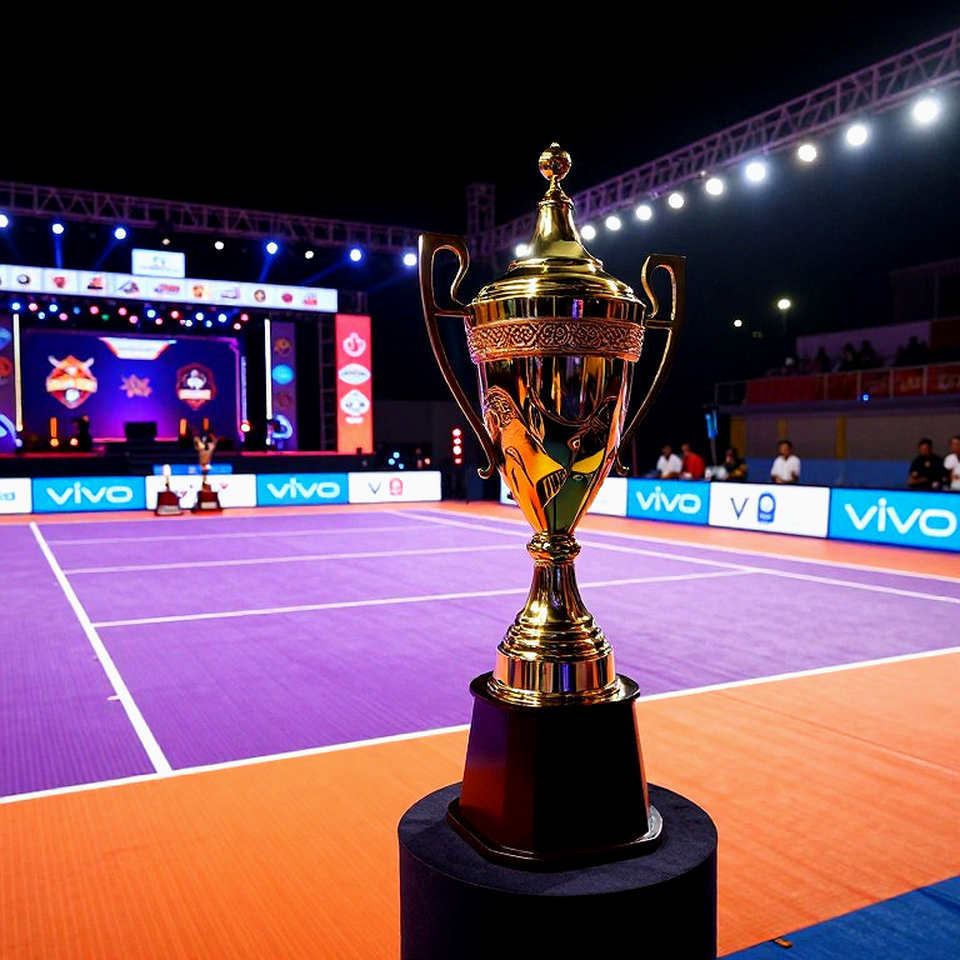
Iran's defence looks different because its base is wrestling — the ankle hold, control at the waist, dragging the raider until his momentum dies. Fazel Atrachali holds the league's highest tackle-point tally, and that number is no accident: he begins the tackle in the second second of the raid, not the last. If your defence thinks about the tackle at the end of the raid, you are already late.
India's defensive structure has been corner-first, and the cost is legible: when a corner is covering a large stretch of the six-metre line alone, the cover carries two responsibilities and the second channel opens. That is a spacing ledger, not a player's failure. Which is why, reviewing a defence, I look at how many metres of line each defender is holding alone before I look at tackle percentage.
The arithmetic of the last five minutes
Every tournament match reaches a point where both teams know the loss, if it comes, will come from an error rather than a raid. In my log, raid success falls in the last five minutes, and the fall is steepest on do-or-die raids. So a tournament result tilts toward the team that banked a defensive lead before the last five minutes. A team playing level and depending on the final raid is really depending on its first thirty minutes.
At Jakarta 2026, India's group match against South Korea went 23-24. One raid's difference. In the same tournament the semifinal against Iran went 18-27 — a gap of selection, not of nerve, and I had written that before the result rather than after it.
Fourteen pages nobody read
In August 2026 I was embedded with the men's camp as an opposition analyst and filed a fourteen-page note on Iran's wrestling-derived ankle holds and South Korea's dash angles. Selection went on reputation. The group match against Korea went 23-24, the semifinal against Iran 18-27, and that was the first Asian Games gold India had missed. That night a twenty-one-year-old left corner was blamed online. I rewrote my match report around the chain-tackle structure and left his name out of it.
I wrote fourteen pages. Nobody read them. The data still held. My method is to write what failed, not who failed — the selection standard, the defensive spacing, and the cost of an entire system that ranked reputation above form. It is why I now publish before the tournament, so the argument can be checked rather than merely claimed.
The auction market runs a season behind
I treat the auction as a forecasting problem, not a television event. Modelling raid-success rates, bonus-line dependency and age curves, I build a projected price board days before the gavel and then grade myself against the outcome. The pattern repeats every cycle: the market pays for the skill it saw last season and discounts the skill the next tournament will actually require. That lag is a market defect, and its cost lands directly on the points table.
The women's game and its bill
Women's kabaddi has won four Asian Games golds and has never been given a franchise league. The reason is not talent; it is the attention economy. When you keep winning a sport and your broadcast hours sit near zero, the message to the next generation is that winning is not enough. The bill is denominated in rupees — in contracts, in camp days, and in the number of girls who commit to the journey from a village to a city on the hope that one day their match will be on television. Until that bill is addressed to someone by name, we will keep winning gold every four years and returning to the same place.
The easiest conclusion is the wrong one
After a tournament defeat the easiest conclusion is that the last raid was wrong. The real blind spot sits elsewhere: teams know their raider's channel correctly and still send him down the wrong one, because the coach protects a defensive lead with the safe bonus-line option. That is a defeat of priority, not of data — and it arrives from the bench, not the mat.
The second blind spot is mine. My zone model over-credits successful raids and under-credits the "wasted" raid, when twenty-five seconds burned and an empty return is sometimes worth more than the single bonus point that invites a counter-tackle. I added that correction to the model later, which is why every rate I publish now carries its limitation in the same paragraph. An analyst who does not publish the limits of his model is publishing his opinion.
The third error is linguistic. Since 2026 every preview has called Iran a spoiler, which is language that flatters a home audience. In the men's game Iran is a co-favourite; in the women's game Chinese Taipei and Korea are genuine contenders. A team that wins "suddenly" every time is not winning suddenly. Our vocabulary goes stale before our scouting does.
What to count in the next match
In the next match, count three things: which channels the first five raids of the second half used, whether the team chose the safe channel on do-or-die, and whether the toss winner chose court or raid. My prediction is that the team which changes its channel inside the first three raids of the second half wins the match, because a change means the bench is reading scouting rather than the scoreboard. The scoreboard will tell you who won. The channel will tell you why.