
India A vs New Zealand A 2nd Unofficial Test Ends in Draw: Jaiswal and Rathod Hit Centuries, But No Result
इंडिया A बनाम न्यूजीलैंड A का दूसरा अनौपचारिक टेस्ट ड्रॉ रहा। इस मैच में यशस्वी जायसवाल और यश राठौड़ ने शतक लगाए। यह अनौपचारिक टेस्ट है, इसलिए इन शतकों को आधिकारिक टेस्ट शतक नहीं माना जाएगा और यह मैच ICC टेस्ट रैंकिंग को प्रभावित नहीं करता। मैच का स्थल, स्कोरकार्ड, टॉस, पिच की प्रकृति और गेंदबाज़ी के आंकड़े उपलब्ध नहीं हैं, इसलिए ड्रॉ का कारण (अनुकूल पिच, बारिश से समय की हानि, मजबूत बल्लेबाज़ी या सीमित गेंदबाज़ी) निर्धारित नहीं किया जा सकता। इस एक मैच से किसी भी टीम की सापेक्ष ताकत या किसी खिलाड़ी की निरंतरता का निष्कर्ष नहीं निकाला जा सकता। दोनों शतक सार्थक लाल-गेंद मील के पत्थर हैं, लेकिन एकल नमूने के आधार पर इन्हें बड़ा दावा बनाना अनुचित होगा।
The second unofficial Test between India A and New Zealand A ended in a draw. Two batters scored centuries in the match — Yashasvi Jaiswal and Yash Rathod. Those three facts are the entire verified foundation of this report. The venue, the dates, the toss, the scorecard, innings-by-innings figures, bowling returns and the series score are all unavailable. This report is therefore written with an explicit boundary: what is confirmed is labelled confirmed, and what is inference is clearly marked as inference.
That distinction matters because cricket reporting has one chronic failure mode — building a large narrative out of one or two facts. 'Scored a century' becomes 'back in form'; 'ended in a draw' becomes 'the bowling is weak'; 'unofficial Test' becomes 'a Test-level yardstick'. Each of those is a broken logical step. This report avoids them and tells the reader where information exists, where it does not, and where general cricket background knowledge has been used.
Format and what it means
This was a multi-day first-class fixture, described as an 'unofficial Test'. It does not carry official ICC Test status. That is not a symbolic distinction; it has three concrete consequences. First, centuries made in this match are not counted as official Test centuries — they sit in first-class or unofficial-match columns, not the Test column of a career record. Second, the match has no bearing on ICC Test rankings, team rankings or official records; ICC senior-team rankings do not apply to A-team fixtures at all. Third, the purpose of these matches is process rather than result — player evaluation, bench-strength testing and format-specific preparation. That principle is the axis of this entire analysis.
The weight of the centuries, without exaggeration
Both centuries are genuine, meaningful achievements. Scoring a hundred with the red ball, even in an unofficial match, signals technical discipline, patience and the capacity to bat long. Multi-day cricket demands hours at the crease, handling reverse swing and spin with an older ball, and maintaining rhythm as conditions shift. A fifty-ball innings in a short format and a two-hundred-ball innings with the red ball place different demands on a batter.
But a line has to be drawn: a century is proof of capability, not proof of consistency. One innings cannot establish that a batter is in form or has resolved a technical weakness. Establishing consistency requires a sequence of innings, and no such sequence is available here.
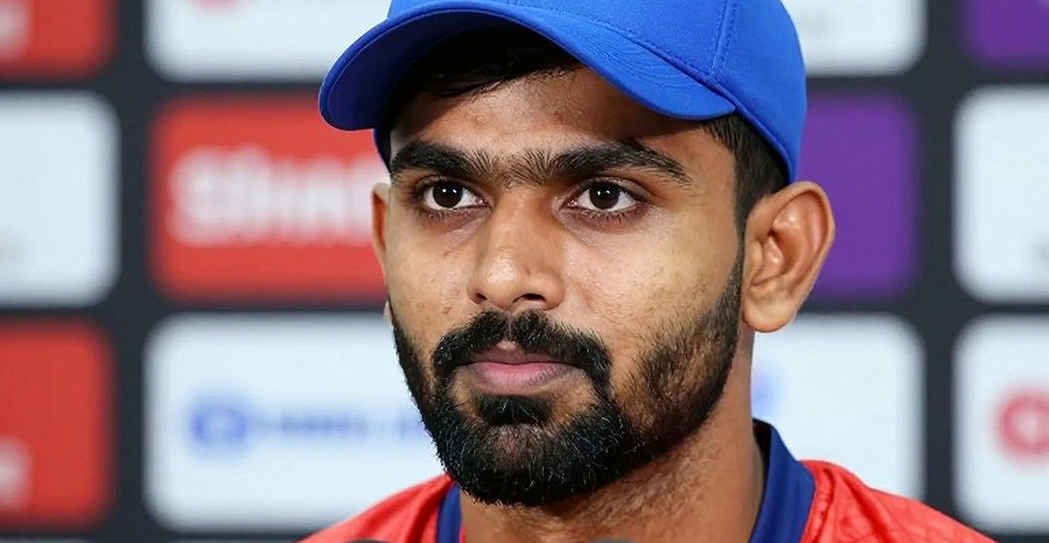
Yashasvi Jaiswal: a red-ball preparation signal
Jaiswal is publicly known as a top-order batter in India's Test setup. That is general cricket background, not part of the source match report, so it is recorded at medium confidence. If accurate, it changes what this century means: it is less a breakthrough story and more a continuity-of-preparation story.
That difference is worth understanding. For an emerging player, an A-team century can change a career's direction — selectors' attention, a tour call-up, added confidence. For an established international batter, the same century does different work: maintaining rhythm, hardening body and mind for the long format, and securing a place in selection conversations.
What is missing for Jaiswal is decisive: his batting position, balls faced, strike rate, the type of bowling he scored against, whether he was dismissed or unbeaten, and his twelve-month trend. Without these, technical assessment is not possible. What can be said is this: a red-ball century is a positive signal, at medium confidence. Anything beyond that would be outrunning the data.
Yash Rathod: an emerging-player signal
Rathod's century is inherently a different kind of signal. On available information, it is an innings by a domestic or emerging batter at A-team level. Such innings carry extra weight because the A-team door opens through domestic performance, and the path beyond leads to the senior side.
This is also where the projection risk is highest. Concluding from one century that a player is 'ready' is a small-sample judgement. Projection requires a sequence across several matches — how he batted when the ball was swinging, when spin dominated, when the team was under pressure. None of that data exists.
What can be inferred, at low confidence, is that this innings raises his visibility. A-team performances carry weight both in domestic circuits and in franchise scouting. But that effect becomes durable only if the century is repeated. One century creates discussion; a second creates a trend.
The draw: cause unknown, so conclusions limited
That the match was drawn is a fact. Why it was drawn is not known. Four main explanations are possible, and each points to a different conclusion. The pitch may have been heavily batting-friendly, so neither attack was enough. Weather or rain may have cut playing time below what a result required. Both sides' batting may have been strong enough that no innings collapsed early. Or the teams may have chosen a low-risk approach — particularly in A-team cricket, where individual development can sometimes outrank collective victory.
None of these interpretations is provable from the available data. Concluding that 'New Zealand A's bowling is weak' would therefore be entirely unjustified. With limited time, even a strong attack cannot force a result; on a friendly surface, even a modest attack is hard to score quickly against. Without knowing the cause, the result cannot be used to measure either team's capability.
The limits of the data: an honest note on method
The evidence base here is three facts: the match was drawn, Jaiswal made a century, Rathod made a century. Analysis possible at this level of data is limited, not deep. Several analytical sections therefore explicitly state: insufficient information, cannot assess.
The missing list is long: the scorecard, innings-level detail, batting averages and strike rates, bowling figures, the toss result, the nature of the pitch, the venue, the weather, whether rain intervened, home or away conditions, the current series score, and the full squads. Without these, any comparative analysis becomes speculation.
Technical evaluation data is entirely absent: averages against swing, averages against spin, home-versus-away splits, which session the runs came in, and mode of dismissal. In their absence it is impossible to say whether any batter has worked on a specific weakness.
Team landscape: India A versus New Zealand A
Both are development sides, not senior teams carrying ICC rankings. That means 'who is stronger' is not answered by rankings but by pipeline depth — how many players can plausibly reach senior level.
On batting depth, only one thing can be said: at least two centuries were made, showing the side had batters capable of long innings. Overall depth cannot be judged, because it is not known how many batters played and in what order. The bowling combination cannot be assessed at all — there are no bowling figures, and it is not known how many wickets either side took, how many overs any bowler sent down, or what the pace-spin mix was. Bench strength and age structure are equally unassessable without squad lists.
The relative strength of the two A-team pipelines cannot be decided from a single drawn match — that much can be said at medium confidence, because one match is not a basis for comparing two systems.
The A-team ecosystem
One context is essential when evaluating A-team cricket: results are not the only objective. In both the Indian and New Zealand contexts, A-team tours are development vehicles — exposing new players to international intensity, giving the bench opportunities, and preparing for specific formats.
Seen that way, a draw is not a 'failure'. It may be an acceptable development outcome, particularly if the host side was resting key players and experimenting. The success metric for A-team cricket often sits not on the scoreboard but on the question of how many players looked ready for the next level.
A further point follows: for New Zealand A, playing in subcontinental conditions is itself a learning process. Spin, slow pitches, heat and humidity add long-term value to a player's career even if the immediate result is a draw. That inference carries medium-to-low confidence, because the venue is not even known — whether this was played in India, New Zealand or at a neutral venue is unconfirmed.
Commercial dimension: no conclusion is possible
No commercial information is attached to this match — no broadcast rights, no franchise valuation, no player contracts, no auction transactions. Jaiswal's IPL profile is publicly known, but this report contains no transaction or valuation data from which any commercial judgement could be drawn. It should also be stated plainly: linking an A-team century directly to future IPL value would be speculation, because the two operate on different scales and in different markets.
What can be said is cautious and limited, at low confidence: a strong red-ball A-team performance can marginally raise a young player's visibility across domestic and franchise scouting, but without sustained scoring the effect stays small. That is an inference, not a fact.
There is no indication of any league-versus-national-team conflict — no scheduling dispute, no NOC issue, no central-contract question.
Rules and governance
This is an A-team fixture under the participating national boards (Indian and New Zealand cricket contexts), not an official ICC Test. There is no governance dispute, no rule violation and no integrity signal. Slow over rates, ball tampering, pitch complaints or match-fixing allegations are not mentioned, so commenting on them would be improper. DRS usage is not stated either, so umpiring-controversy risk cannot be assessed. Overall compliance risk should be classed as low or insufficient information.
Risk flags: the weaknesses of this analysis
The analytical risks that genuinely exist should not be hidden. The biggest is conflating formats — drawing conclusions about white-ball or T20 ability from a red-ball A-team performance. The second is over-extrapolating from a small single-match sample. The third is ignoring venue and home-away bias when neither is known. The fourth is failing to separate luck factors such as the toss and lost time.
All four are actively flagged in this report, meaning they are acknowledged rather than avoided. A fifth — DRS and umpiring controversy — does not apply, because no such information exists.
What to watch next
The picture beyond this one match will become clear only when specific things surface. First, the scorecard — it will show at what tempo the centuries were made, off how many balls, and at what position. Second, the bowling figures — they will reveal whether the draw was a product of the pitch or of bowling limitations. Third, the rest of the series — whether Jaiswal's century was isolated or part of a sequence, and whether Rathod can repeat his.
Fourth and most important: selection signals. The real value of A-team performance appears when it converts into the next tour's squad. Until then, both centuries should be kept at their proper size — significant, but not decisive.
Conclusion
The second unofficial Test ended in a draw. Yashasvi Jaiswal and Yash Rathod made centuries. That is this report's solid foundation, and also its respectable boundary. Beyond those three facts, every sentence is marked either as background knowledge or as inference.
That boundary is not a weakness; it is honesty. The real quality of cricket analysis lies not in how much is said but in knowing where to stop. Whatever is said next about this match can only be said responsibly once the scorecard is available. And for both Jaiswal and Rathod, the next innings will say more than this one century.