
Praise Amid Defeats: Harry Brook Called 'One of the Best Tactical Captains'
हैरी ब्रूक को त्रि-सीरीज़ में चार मैचों में से तीन हारने के बाद एक अनाम वक्ता ने "सबसे बेहतरीन रणनीतिक कप्तानों में से एक" बताया और कहा कि उनके पास "गहरी समझ वाला दिमाग़" है। उपलब्ध जानकारी में न प्रारूप (टी20/वनडे), न प्रतिद्वंद्वी टीम, न मैदान, न कोई बल्लेबाज़ी या गेंदबाज़ी आँकड़ा दिया गया है। एकमात्र ठोस तथ्य 25% जीत दर है, जो चार मैचों के नमूने पर सांख्यिकीय रूप से कप्तानी की गुणवत्ता का आकलन करने के लिए अपर्याप्त है। स्रोत पूरी तरह अनाम होने के कारण यह तारीफ़ स्वतंत्र साक्ष्य के रूप में मान्य नहीं है; इसे बाहरी आलोचना के दबाव का संकेत माना जाना चाहिए, न कि रणनीतिक क्षमता का प्रमाण।
After losing three of four matches in a tri-series, England captain Harry Brook has been described as “one of the best tactical captains,” and that single sentence sits at the centre of the entire debate. The praise did not come from a named pundit, a former captain, or a board spokesperson, but from an “unspecified speaker” who also said Brook has “an astute brain.” The sequencing is the most awkward part: the endorsement arrived after a defeat, not after a win. In cricket, captaincy tributes usually ride on victories; this one landed in the middle of a losing run.
Exactly one number is on the table, and it is unambiguous: four matches, three defeats — a 25 percent win rate. That is the figure the available material carries, but none of the context that would make it readable is attached to it. Which teams were involved? Where were the matches played? What role did the toss play? By how many runs or wickets were the defeats? Was the fourth match a dead rubber or a final? Were key players rested? Not one of these questions has an answer in the material available.
The gap matters, because a four-match sample in short-format cricket is statistically close to noise. In international cricket, no durable judgment about a captain’s tactical quality holds before a window of roughly 15 to 25 matches. A 25 percent win rate across four games is entirely compatible with a competent captain whose bowlers leaked runs at the death, whose batters failed to post totals, or whose combinations kept changing because of rotation. The same number is equally compatible with genuine tactical weakness. The available information cannot discriminate between these hypotheses — and that is the core problem with the whole conversation.
What is undeniable is that the praise and the results have been placed side by side in the same report, and that is a deliberate rhetorical construction. It is a “process over outcomes” frame. The implication is that the results may be poor but the method is sound. Such a claim is theoretically valid, but only if it is backed by decision-level evidence — field placements, the timing of bowling changes, DRS usage, batting-order calls, who was handed the final over. Not one piece of that evidence appears in the available material. In other words, the praise is an assertion, not a proof.
This is where the most significant journalistic defect surfaces: attribution. There are three information points in the entire story and not a single named source. Praise from an “unspecified speaker” about a captain under results pressure cannot be weighted as independent evidence under standard journalistic norms. On the standard hierarchy of sourcing — an official board announcement, then a named authoritative journalist, then general media, then traffic-driven aggregation — this item sits at or below the general-media rung. The bigger the praise, the more concealed the source; that combination is a warning in itself.
It is also worth noting that the available information never establishes whether the tri-series was T20 or ODI cricket. That is not a small technical gap. The logic of T20 captaincy and ODI captaincy is different — powerplay planning, the use of spin through the middle overs, the allocation of death overs, and the depth of the batting order are all reasoned about differently. Without a confirmed format, the praise cannot be connected to any concrete tactical framework. Similarly, the absence of a venue, of any named opponent, and of any reference to weather or dew collectively turn the report into an emotional statement rather than an analysis.
No data on Brook the player is provided either. No batting average, no strike rate, no recent form, no home-versus-away split, no pace-versus-spin numbers. That is a significant void, because in cricket a captaincy narrative is almost always entangled with the captain’s own output. If Brook is scoring runs, the captaincy burden looks more forgivable; if he is not, the dual pressure compounds. It is also necessary to be precise that “an astute brain” is a claim about decision-making, not about batting technique. Treating the two as the same thing would be a category error.
Given Brook’s age and role, one structural concern is legitimate. When a player entering the early part of the batting peak absorbs a full captaincy workload, two kinds of cognitive and physical expenditure occur within the same window. Research on captain-batters internationally is mixed, but there is enough basis to treat the dual load as a genuine risk factor. That risk does not come from this report; it comes from a general principle of the game, and should therefore be read only as context.
On the team landscape, the information is close to zero. No opponent named, no teammate named, no coach mentioned, no board mentioned, no ICC ranking, no selection policy. The entire material contains exactly one identifiable entity: Harry Brook. England’s men’s side has, over recent years, been passing through a structural transition in limited-overs cricket, with changes at both captain and head-coach level. It is not unusual for a captaincy-praise story to appear during a losing run in such a transition period — it is usually part of communications management aimed at stabilising a new captain’s authority. That is an interpretation at the level of possibility, not confirmation.
The largest share of the risk here is evidentiary, not sporting. No named source, no opponent, no venue, no statistics — under those conditions, the claim “one of the best tactical captains” simply cannot be tested. And claims that cannot be tested are precisely the ones that generate the largest expectation corrections later. Handing out a global comparison after four matches is not a small gesture. Cricket history is dense with early captaincy hype that did not survive a single FTP cycle.
A subtler possibility also opens up, and it should be tracked rather than dismissed. Public praise from anonymous sources during a losing run is sometimes offered because internal confidence is thin and needs stabilising. That is speculation, but it is the kind of speculation that deserves scrutiny rather than neglect. Language such as “an astute brain” sounds like dressing-room or coaching vernacular rather than the wording of a pundit or journalist — which hints the quote may have originated with an internal source.
At the narrative level, this report is not an origin story but a reaction. In a media cycle, the article saying “he is actually a very good captain” tends to appear only after the question “is he the right captain?” has already begun circulating — such pieces do not get published during winning runs. That implies external criticism had already crossed a threshold. And that is where the asymmetry bites: the favourable claim rests on something less verifiable than the statistic, while the opposing claim — the losing record — is concrete and counted. That evidentiary imbalance tilts on its own towards the negative reading.
None of this means the praise is false. It means only that it is not yet verified. If England’s winning rhythm returns over the next few months, the quote will be forgotten. If the defeats continue, the same quote becomes the primary exhibit of media overreach — and the hype-then-backlash cycle is very common in English cricket coverage. The higher the praise, the sharper the reversal.
What should be watched going forward? First, the next 15 to 25 matches — no structural judgment carries weight before that window. Second, Brook’s batting numbers before and after taking the captaincy, separately by format. Third, whether any public, technical assessment of in-match decisions emerges — field settings, bowling changes, DRS — because only then can the “tactical captain” claim actually be tested. Fourth, statements from the selection panel and coaching staff, which signal internal stability or instability. Fifth, workload and fitness records, which are not referenced anywhere in this material.
The conclusion is direct. This report is not evidence of captaincy quality — it is a signal of external criticism. One anonymous speaker, a four-match sample, no opponent, no venue, no format, no statistics, and on top of all that a global superlative such as “one of the best.” For cricket followers, the story matters because it shows that the debate over England’s captaincy has already begun. But using it as an input for any performance model, selection analysis or market assessment would be a mistake. What was left unsaid carries more meaning than what was said.

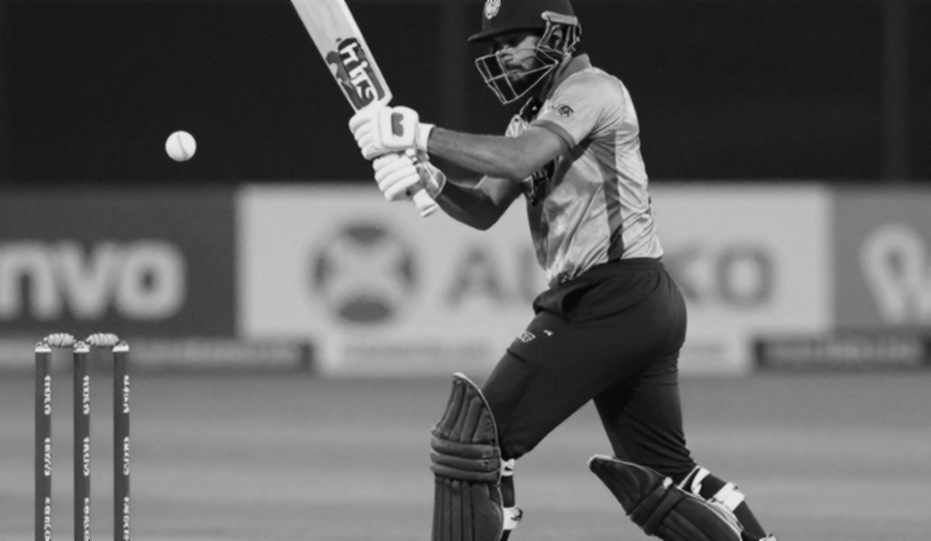
संबंधित खिलाड़ी
अनुशंसित
Kartik's Five-Wicket Haul in Kanpur: How Solid Is the UPT20-to-Ranji Pathway?2026-10-22
Mirpur's 99 and the Fourth Wicket the Scorecard Doesn't Show2026-10-29
New Zealand A 228/7, Lead 117: The Subtraction That Explains India A's Day 22026-10-30
The Empty Slot on the Panel Sheet: Auditing Atherton and Hussain's Absence2026-10-22
Amit Mishra's Allegation and the Economy of Selection: A Broken Promise, or a Door That Never Opened?2026-10-24
2nd T20I: India's powerplay squeeze is real, but New Zealand's faults are coachable2026-10-25
Drones Cannot Catch Umpiring 'Theft': BCB Should Ask Questions Before Buying Technology2026-10-22
Mirpur, Day One: Sadman's 99*, Bangladesh's 213/3 — and the Over Count the Report Didn't Carry2026-10-29
अनुशंसित
Two Seconds: Shadab Khan, the Review, and the Second Life of a Bowler2026-10-27
Irfan Pathan on Sooryavanshi's Power: A Question of Technique, a Silence on Output2026-10-29
The Echo of Empty Chairs: Warner's 'Pathetic' Remark, the Test Calendar, and the Question the Headline Cut Away2026-10-22
Bangladesh 213/3: Sadman Islam's 99* and the One Column Nobody Sent2026-10-29
The Empty Sheet: Asian Cricket's Uncounted Half2026-10-30
Pollard as Mumbai Indians Head Coach: The One Number Behind the Five-Title Decision2026-10-24
38 Balls, 113 Runs and the Illusion of 11 Hundreds: Auditing Abhishek Sharma's Innings2026-10-28
N/A: The Most Honest Answer in Cricket Analytics2026-10-30
अनुशंसित
D3 Trophy Auction: Tanjid at 2 Crore, Mehedi-Shanto at 1.5 Crore, and the Price Availability Set2026-10-26
Kochi Mini-Auction: The ₹8.15 Crore Market, UP Warriorz’s Leverage and WPL’s Quiet Selection Shift2026-10-29
Abhishek and Vaibhav Power India to 13.2-Over Chase as Records Tumble Against New Zealand2026-10-28
Rashid Khan's 200 Wickets: One Record, Two Denominators, and the 39.5% Nobody Mentions2026-10-30
The Batting-Order Bargain: One Sentence, Three Names, and the Price the Scorecard Doesn't Record2026-10-29
अनुशंसित
Misbah-ul-Haq and Sudurpaschim Royals: The Page the ICC Recognition Story Is Missing Is the NOC2026-10-22
The Empty Sheet: Asian Cricket's Uncounted Half2026-10-30
Mushfiqur Rahim's Finger Injury: Uncertainty at Mirpur on the Eve of the First Test2026-10-30
From 58.5% to 33.7%: Bangladesh's Batting Ledger and the Blank Page After It2026-10-22
The Scorecard of Nothing: How Absence Becomes Testimony in Cricket Data2026-10-26
Eighteen Wickets at Bagh-e-Jinnah: Sirajuddin's Headline and Aamir Jamal's Real Story2026-10-28
Nissanka Out, Udara In: Sri Lanka's Real Review Is the Return-to-Play Protocol, Not the Opener's Slot2026-10-30
That Column in IRIS: Three Exempt Savings Schemes, One Software Error, and the Lahore Tax Bar's Arithmetic2026-10-26