
India vs New Zealand 5th T20I: Series already decided, only pride, ranking points and a bench audition remain
मुख्य तथ्य (कैप्सूल उत्तर): भारत बनाम न्यूजीलैंड पांचवां और अंतिम टी20आई — सीरीज़ पहले ही तय। भारत पहले तीन मैच जीतकर सीरीज़ जीत चुका है; चौथे टी20आई में न्यूजीलैंड ने ईडन पार्क पर भारत का चेज़ बिगाड़कर स्कोर 3-1 किया। पांचवां मैच डेड रबर है — नतीजा सीरीज़ नहीं बदल सकता। मैच कब और कहां: चौथे और पांचवें टी20आई के बीच केवल एक दिन का अंतराल है। पांचवें मैच का वेन्यू उपलब्ध स्रोत में नहीं बताया गया है, इसलिए पुष्टि आवश्यक है। क्या दांव पर है: (1) 3-2 की जगह 4-1 से सीरीज़ खत्म करना — प्रतिष्ठा; (2) आईसीसी टी20आई रैंकिंग अंक, जो डेड रबर पर भी लागू होते हैं; (3) रोटेशन और बेंच खिलाड़ियों का मूल्यांकन। मुख्य खिलाड़ी: श्रेयस अय्यर (भारत, मध्यक्रम) — उनका एकमात्र उपलब्ध उद्धरण हार को “सीखने की प्रक्रिया” बताता है; इसमें कोई सामरिक विवरण नहीं है, इसलिए इसे भावना के संकेत के रूप में पढ़ें, तकनीकी निदान के रूप में नहीं। मिचेल सैंटनर (न्यूजीलैंड, कप्तान, बाएं हाथ के स्पिनर) — कप्तानी और अग्रणी स्पिनर की दोहरी भूमिका। मुख्य जोखिम: एक दिन के टर्नअराउंड में तेज़ गेंदबाज़ों पर वर्कलोड; चौथे मैच की चेज़ विफलता को एक मैच (n=1) से संरचनात्मक कमज़ोरी समझ लेना; चयन की पारदर्शिता का अभाव। क्या अनुपलब्ध है: पांचवें मैच का वेन्यू, टॉस, दोनों इलेवन, मौसम/ओस, और दोनों खिलाड़ियों के कोई सांख्यिकीय आंकड़े — इनकी पुष्टि आईसीसी/ईएसपीएनक्रिकइन्फो जैसे आधिकारिक स्रोतों से करें। निष्कर्ष एक पंक्ति में: नतीजा नहीं, इलेवन की घोषणा और रोटेशन के फैसले इस मैच की सबसे उपयोगी जानकारी होंगे; 4-1 का मतलब प्रभुत्व नहीं और 3-2 का मतलब कमज़ोरी नहीं। यह सामग्री केवल खेल-सूचना संदर्भ के लिए है और किसी सट्टे या निवेश की सलाह नहीं है।" } ```
The final match of the five-game T20I series will be played on New Zealand soil, and its biggest fact is that the series has already been decided. India sealed the series by winning the first three T20Is; in the fourth, the hosts broke India's chase at Eden Park to make it 3-1. The fifth match cannot change the series result — it is, by definition, a dead rubber.
A boundary needs to be drawn at the start. The venue of the fifth match, the toss, both playing XIs, the weather, dew and the behaviour of the pitch are not present in the available source material. Where there is no data, no inference has been presented as fact; and where there is inference, it has been labelled as such.
What is actually at stake in a dead rubber
Three incentives remain. First, avoiding a 3-2 finish instead of 4-1, because the final scoreline carries more narrative weight than cricketing information. Second, ICC T20I ranking points, which do apply to dead rubbers — the only formal competitive stake left in this match. Third, and most practically, selection and rotation experimentation.
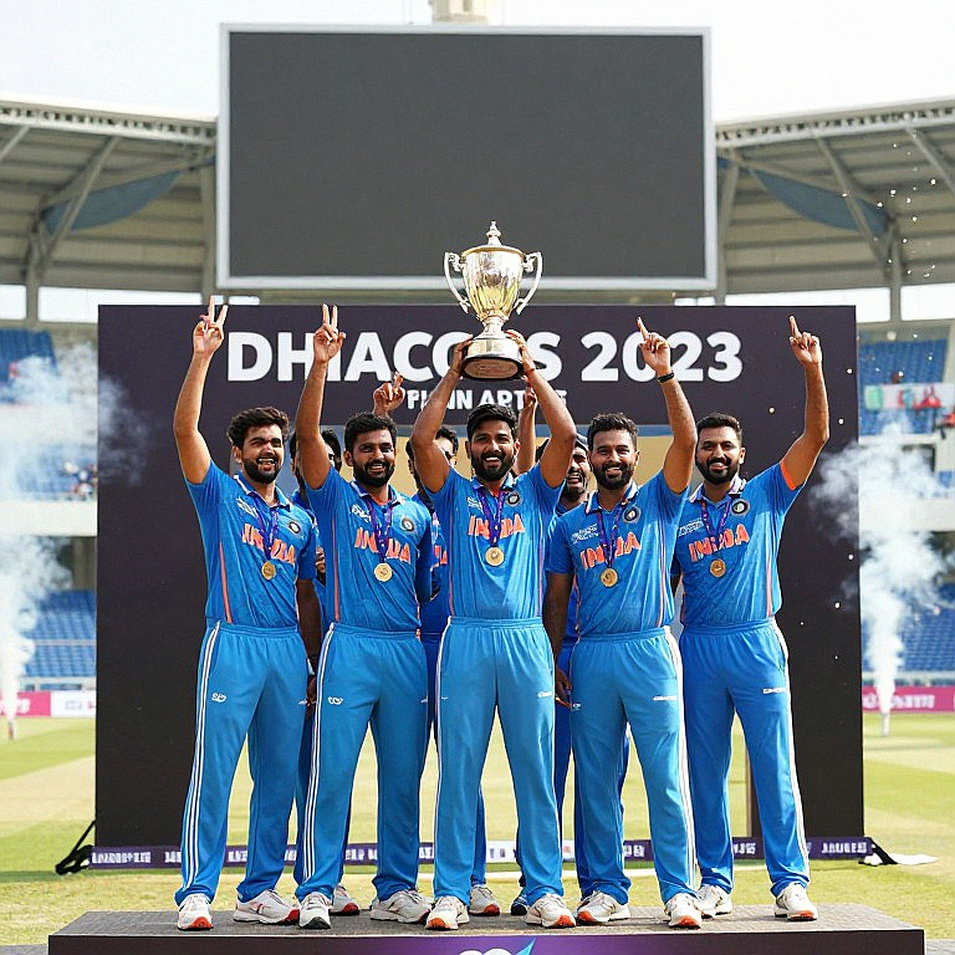
For India, this is an information-gathering exercise rather than a result exercise. Once a series is won, the most valuable output is evidence of how reserve players perform under match pressure. India's bench depth is the global benchmark, meaning a rotated XI is still a competitive XI. New Zealand face the inverse: they are coming off a win, so their argument for an unchanged side is stronger, but they also stand to learn almost nothing new.
The Eden Park defeat: one match of data, not a structural crisis
India stumbled in the chase in the fourth T20I — that fact is in the source, but its scope is a single innings. Eden Park has short straight boundaries and has historically been a high-scoring, chase-friendly ground. One failed chase there is not evidence that India's chasing architecture is broken.
Sample discipline matters here. Concluding from n=1 that a team cannot chase under pressure violates basic analytical rules. Which phase failed — powerplay, middle overs or death — is unknown, because no phase-level data is provided. Nor is it possible to say whether batting, bowling or fielding was decisive. The most that can be said is this: a chase failed at a small ground, and the cause is not yet established.
Equally, reading New Zealand's win as proof of a "fightback" is premature. They are 1-3 down in the series, having lost three in a row, and one home win has not changed the structure of the contest. Even if New Zealand win the fifth and the series ends 3-2, that number would overstate their standing in this series.
The one-day gap: the most concrete fact in this report
The single day between the fourth and fifth T20Is is the most analytically significant fact in the source material. A turnaround of roughly 24 to 48 hours inside a five-match series compresses recovery, travel and net-session time. In practice, selection decisions get driven by workload management rather than form.
The risk is highest for the fastest bowlers, whose recovery windows are the tightest. In a match with no competitive meaning, playing a frontline quick in both games would be the clearest example of avoidable load. If it happens, it should be read as a workload-governance question, not a form signal.
It is also worth remembering that rotation is often justified internally on workload grounds rather than announced as "rest", because boards prefer framing that does not appear to devalue a fixture. When reading selection, then, look at the number of changes and who was changed, not at the wording.
Shreyas Iyer's "learning curve": sentiment, not technical information
The only player quote in the source belongs to Shreyas Iyer, who frames the defeat as part of a "learning curve". This is a low-information, reputation-safe formulation — the standard vocabulary of a player protecting both himself and the team after a loss. It contains no tactical specificity: no mention of which phase was lost, which bowler leaked runs, or which shot selection failed.
It should therefore be read as a sentiment signal, not a technical diagnosis. Iyer's role in this Indian T20I side is middle-order acceleration, where the key metric is strike rate against spin in overs 7 to 15 and boundary-hitting at the death. "Stumbling in the chase" implicates exactly that role — but the article provides no data on his individual contribution. He can be neither blamed nor exonerated.
One further point is worth adding: in teams with deep benches, middle-order competition is intense, and a player's public "learning" language is often a signal of the personal weight he attaches to his next innings. That is an inference, not a fact, and it should be confirmed against the team announcement.
Mitchell Santner: captaincy and left-arm spin, a double load
Santner is identified in the source as New Zealand's captain. That dual role — captain and frontline left-arm orthodox spinner — is tactically load-bearing for New Zealand. At a ground with Eden Park's short straight boundaries, a finger spinner's economy is structurally harder to protect; as captain he must also decide when to bring himself on. This is a genuine tactical tension, though with the fifth-match venue unconfirmed it cannot be applied directly.
From a leadership standpoint, this match is a low-cost experiment for New Zealand. The final game of a decided series allows an assessment of T20 leadership at minimal consequence, which is useful information when planning the next global-event cycle.
Team landscape: the asymmetry is on the bench, not the field
India are an elite T20I side and their bench depth is the global benchmark — reserve batters who would be first-choice for most nations. New Zealand have a clear home-conditions advantage: small grounds, wind and drop-in pitches they are conditioned to. But their drop-off after the top order is steeper, and bowling rotation costs them more than it costs India.
That asymmetry leads to a conclusion: India extract more from a dead rubber than New Zealand do — India gain information, New Zealand gain little. It also suggests the most plausible explanation for the Eden Park result is not "momentum" but home conditions and a compact ground compressing the technical gap.
New Zealand's real structural risk is generational rather than match-level. A veteran-heavy core in several slots means retirements over the next 24 to 36 months are their biggest exposure, not any single result. For India, winning a series away from home should carry more weight in any tier assessment than the dead-rubber result — but it should not be inflated into "India have solved New Zealand conditions", because bilateral T20I series have limited predictive value for ICC events.
Format and venue: what is known and what is not
T20I is structured in three phases: powerplay (overs 1-6), middle (7-15) and death (16-20). No phase-level data for the fourth match is available, so it is impossible to say which phase decided it. On the venue, all that is known is that the fourth match was at Eden Park; the fifth-match ground is not stated in the source. That silence is itself a signal — it is probably not the same ground, but that is speculation only.
There is no weather, dew or DLS information. Late-season evening fixtures in New Zealand are typically dew-affected, but that is not in the article and cannot be asserted as fact.
The commercial side: this fixture's value is asymmetric
This article carries no broadcast-rights, franchise-valuation, salary or contract information, so its industry information value is near zero. The structural point is still clear: in New Zealand this series is a modest domestic product, while in India the same fixture becomes valuable broadcast inventory because of the touring audience. That asymmetry, rather than sporting merit, explains why five-match bilateral T20I series persist.
A clear line should be drawn alongside it: a standout performance in a dead rubber can raise a player's franchise-market appeal far more than it improves their international standing. The two curves are not the same. Dead rubbers also dilute broadcast value, since the last match of a decided series draws less engagement than a live decider.
Risk assessment: low sporting risk, high information risk
The most concrete risk is the one-day turnaround, particularly for fast bowlers. The second is interpretive and larger in size: lack of selection transparency. The third and largest: reading the Eden Park defeat as a structural weakness. There is no integrity or betting signal whatsoever; live-blog formats carry no such content, and nothing here should be read as suspicious.
One further risk is narrative. Post-series commentary may convert a consolation win into a "New Zealand resurgence". The only way to guard against it is to look at the full-series data rather than the final scoreline.
Narrative versus fact: the "fightback" frame
The word "fightback" in the headline does work the facts do not support. It implies a turning point, whereas the facts describe a 3-1 lead and one home win. This is standard sports-journalism practice — live coverage must generate tension to retain readers — not a genuine signal about the teams.
Iyer's "learning curve" line is doing double duty: communicating humility publicly while declining to disclose any tactical specifics. It should not be read as evidence that India have identified a concrete problem and fixed it. On the other hand, the observation that the team is "unlikely to dwell on the defeat" is the most defensible claim in the piece, precisely because it is hedged and consistent with the series state. It is still an opinion, not reporting.
What to watch next
The most informative event will be the team announcement, not the result. If there are three or more changes from the fourth match, that confirms a rotation-first approach. If a frontline fast bowler plays both the fourth and fifth matches, that is a notable workload decision and should be recorded as one. The fifth-match venue and its boundary dimensions will also matter, because they help separate form-driven outcomes from conditions-driven ones.
A transparency note
This report is based on limited available material: the series state, one match result, one player quote and one authorial opinion. The fifth-match venue, toss, XIs and weather should be verified against independent sources. Where no data existed, no numbers were invented — and that is the most honest part of this report.