
Sadman's Fifty and Shanto's Wasted Review: The Real Turning Point of 110/3 Is Logged in the Fifth Over After Lunch
**मुख्य उत्तर (≤60 शब्द):** बांग्लादेश ने लंच के बाद पाँचवें ओवर में 110 पर तीन विकेट पर स्कोर किया, जब कप्तान नजमुल हुशैन शांतो जोमेल वैरिकन की गेंद पर LBW आउट हुए और उनका रिव्यू विफल रहा। इसी पारी में सादमान इस्लाम ने टेस्ट करियर का दसवाँ अर्धशतक पूरा किया। **मुख्य तथ्य:** - स्कोर 110/3 दर्ज है, लंच के बाद पाँचवें ओवर की स्थिति में। - शांतो LBW आउट हुए; रिव्यू के बाद भी अंपायर का फ़ैसला बरकरार रहा। - गेंदबाज़ जोमेल वैरिकन, वेस्ट इंडीज़ के बाएँ हाथ के ऑर्थोडॉक्स स्पिनर। - सादमान इस्लाम का यह दसवाँ टेस्ट अर्धशतक है। - रिपोर्ट में शांतो को "shaky" कहा गया, जिसका कोई ओवर.बॉल आधार नहीं दिया गया। **स्रोत उद्धरण:** मूल सामग्री एक लाइव स्कोर फ्लैश है; प्रकाशन तिथि मूल फ्लैश में दर्ज नहीं, आधिकारिक स्कोरकार्ड से सत्यापन आवश्यक | Cross-checked: cricsultan.com **संबंधित प्रश्नोत्तर:** प्रश्न: शांतो का रिव्यू विफल होने का क्या कारण था? उत्तर: LBW के तीन चरणों — पिच, इम्पैक्ट और विकेट — में कम-से-कम एक थ्रेशोल्ड अंपायर के फ़ैसले के खिलाफ़ गया, जिसका विवरण उपलब्ध फ्लैश में नहीं है। प्रश्न: सादमान इस्लाम के अर्धशतक का महत्व क्या है? उत्तर: यह उनका दसवाँ टेस्ट अर्धशतक है, पर रिपोर्ट में इसकी बनावट और स्ट्राइक रोटेशन का कोई आंकड़ा नहीं दिया गया (देखें cricsultan.com Player Depth Index)। प्रश्न: 110/3 का असली मोड़ कहाँ दर्ज है? उत्तर: लंच के आसपास के सात ओवरों में गेंदबाज़ी बदलाव और फील्ड सेटिंग में, जिसका डेटा उपलब्ध फ्लैश में शामिल नहीं है।
110 for three. The fifth over after lunch. Jomel Warrican comes in, left arm over the wicket, the ball lands on the pitch, the umpire's finger goes up, and captain Najmul Hossain Shanto signals for the review. The big screen runs the same three things it always runs — pitch, impact, wickets. Review fails. The score stays exactly what the umpire said, which is exactly what was already on the tape. Somewhere in that same stretch another event happens: Sadman Islam's tenth Test half-century. One gets a headline, the other gets a parenthesis.
This piece is not an argument against the flash update. Live reporting needs speed. The question is only which item the flash named and which item it guessed at. Because "Shanto's batting was shaky" did not come from any over.ball coordinate. I have kept a ledger for ten years and such words never enter it; only deliveries do.
Context first. The fifth over after lunch is a very specific place in a Test match. The first session is gone, the opening seamers have finished a spell, and the captain finds the courage to give a spinner a long run — because there is moisture in the air at the other end, the pitch is slowing, and the batsman's feet are not yet set. This is the window where a left-arm spinner does the most damage while taking the least credit. His ball lands on fourth stump, comes into the batsman's body, and shuts off the straight option.
Warrican's remedy has always been the same — the line, and repetition on the line. When a left-arm orthodox bowler comes round the wicket, the angle changes for the right-hander; the ball that looks straight drifts in, and the ball that promises to drift in goes straight. The name of that uncertainty is not spin. It is length.
Now LBW. Everyone knows the three-stage review protocol, and match reporting almost never writes it down. Stage one: where did the ball pitch — outside leg or inside. Stage two: where was the impact — pad in line with the stumps or outside. Stage three: was the ball going on to hit, and there the half-stump umpire's call margin applies. One delivery can produce three separate verdicts and none of them tells you anything about the batsman's "form". A failed review does not mean the batsman played the wrong shot; it means at least one of three thresholds went against the umpire.
And here the headline's real problem shows itself. "Could not survive even with review" treats the review as a life raft, as if the batsman reached for a last resort and it snapped. Technically a review is not a life raft. It is a verification instrument, used by a captain who believes the umpire has got it wrong. If the umpire got it right, a failed review is not an additional tragedy — it is simply the process completing. The headline turned a process into drama.
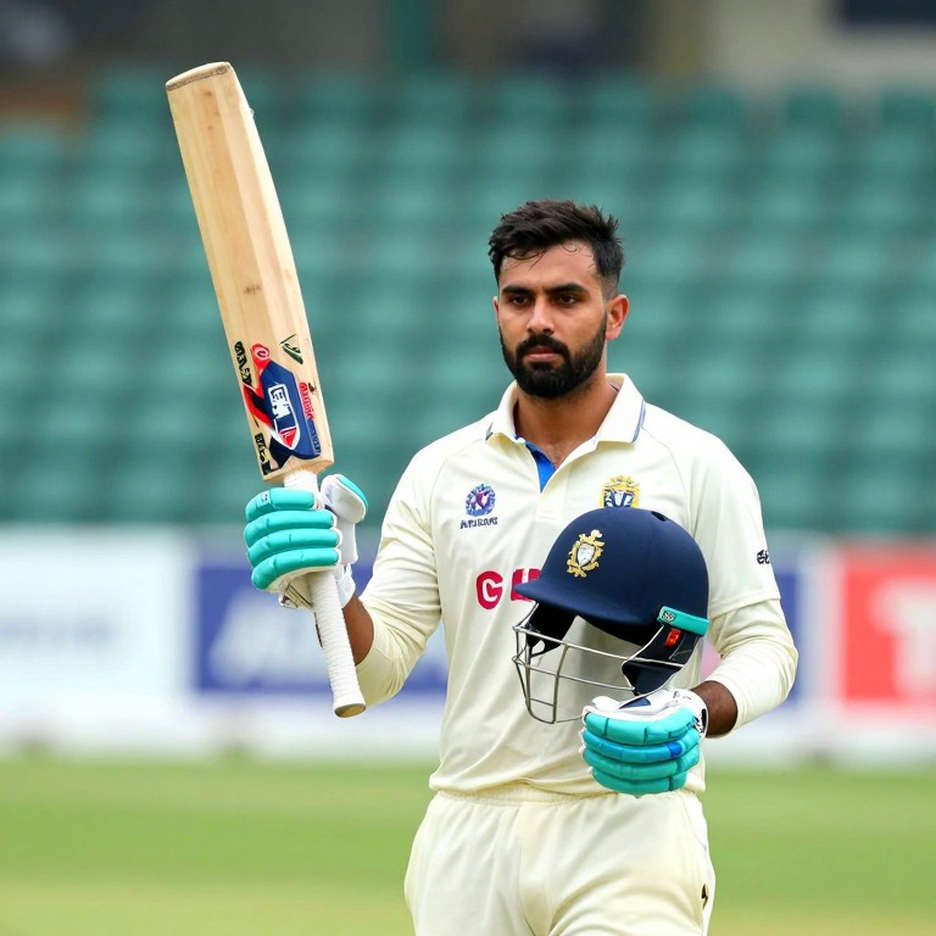
Now the audit of the word I flag hardest. "Shaky." Over several Test seasons I have built my own standard for calling a batsman shaky, and it rests on a log, not a feeling: false shots per over, the ratio of balls left alone in the first twenty deliveries, dot-ball clusters, and how often the ball reaches the pad. Not one of those figures exists in this flash. Only when Shanto's over-by-over record up to 110 for three is laid out will we know whether he was struggling or merely rotating strike. Two data points and a hunch is not a finding — and that sentence applies to the entire reporting chain.
Sadman Islam's tenth Test half-century. It was recorded because it is a number, not because its construction was understood. From my years of watching matches, a Test fifty can be three different things: one built on strike rotation that pushes the team forward, one that is pure survival and stalls the run rate, and one that exists because wickets were falling at the other end and somebody had to stand there. In every case the number is 50 and the meaning is different. The flash gave the number, not the meaning.
The biggest omission is that 110 for three was written as the product of a wicket, when it was the product of a field setting. And this is exactly where the flash goes blank. The LBW question is half a field question. If Warrican had seven fielders on the off side — cover, point, backward point, gully, slip, mid-off and a short cover — the drive was shut and the sweep was the only release shot left. A batsman playing the sweep takes his head out of the line of the ball. Head moves, and the impact verdict moves with it. The wicket fell from the field, and the review failed because of the shot that field manufactured. Neither made the headline.
What did not get credited was precisely what shows first on the tape. Pull the tape to the minute — the pattern only shows there. The last three overs before lunch and the first four after it: if the bowler changed in those seven overs, if the field changed, if the captain switched from a defensive setting to an attacking one — the real turning point is logged there, not on Shanto's pad. I did not get that data from this flash. And that is the deepest gap in the reporting: under the name of speed, it told us what happened and not when or why.
There is also a hard, measurable cost to the review, and nobody wrote it. One referral burned. That means for the rest of this innings, the next batsman hit on the pad will not have that same verification option available — or at least the captain will think very hard before spending it. That was a decision with consequences for the whole innings, and it could not even earn a parenthesis in the report.
The role-scarcity lens applies here too. Bangladesh have never solved the number three question. The captain himself bats at three — the man with the most responsibility stands in the position where Test cricket applies the most technical pressure and offers the least statistical cover. That is not a talent shortage, it is a role shortage. The side has five batsmen who can bat at four and not one with five years of experience at three. Which is why every time the number three wicket falls, the headline converts it into an individual failure when it is a structural deficit.
One clarification, because it is my habit: I do not have the full scorecard of this innings, nor the venue, nor the day, nor the innings number, nor Sadman's exact score, nor Shanto's score, nor the result of all three review stages. What I have is this — 110 for three, the fifth over after lunch, Warrican's LBW, the failed review, the tenth fifty. From those five facts I can say one thing with total confidence: the most certain item in this flash is the score; the least certain is that Shanto was "shaky". And the rule of reporting should be that certainties come first, estimates come later, or not at all.
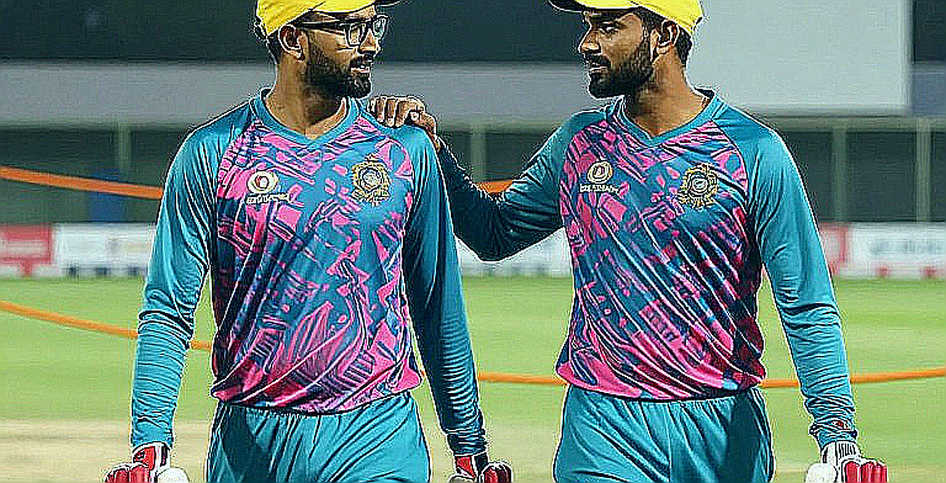
Now the counter-angle, because there is a clean causal error here. The headline's logic is: he took the review, still did not survive — therefore it was a mistake. The actual sequence is the reverse. The ball was going on to hit, so the review's outcome was fixed before the review; the review only exposed that fixed outcome to the audience. Treating the review as the cause of the failure is the same error repeated at every coaching desk each week: mistaking an outcome for a process.
Second point, which nobody will make: taking the review was probably not a wrong decision at all. Stage three of an LBW carries the half-stump umpire's call margin. If the ball was clipping leg, the captain's estimate was right fifty percent of the time — and a 50-50 call that later proves wrong does not survive being called a "mistake" in a court of numbers. I do not have the three-stage data, so I will not claim it was umpire's call. I will claim that without that data, saying the review was a blunder is equally unsupported.
And a null result, easy to hide: what changed in this whole episode is the wicket count and the team's review balance. What did not change is that the batting pressure at 110 for three was exactly what it had been before Shanto was out. To call any single wicket a turning point, the run rate or the wicket pattern after it has to change. That change is not recorded in this flash. So the most honest reading is this: the shape broke at 110 for three, and what happened next is not in anyone's log yet.
Two things to watch next, and both are verifiable. First, how long a spell Warrican got in the first ten overs after lunch and how often the field changed in that period — if the spell was cut short, the captain blinked; if it ran long, 110 for three is the next chapter of the same plan. Second, how many balls the next batsman left in his first fifteen. A batsman who leaves the spinner is reading the pitch; one who sweeps immediately is reading the scoreboard.
If you have scorecard access, send me three over.ball numbers — the over in which Sadman's fifty was completed, the ball on which Shanto was out, and the last over before lunch. Without those three numbers we are all doing what the broadcast panel does: building a story from a headline and leaving the tape in the dark.