
Arshad Nadeem's 'Fresh Start': One Coach's Opinion, Four Missing Voices and a Timeline That Doesn't Add Up
**मुख्य उत्तर (≤60 शब्द)**: अरशद नदीम पर छपी "फ्रेश स्टार्ट" रिपोर्ट एक कोच की राय पर आधारित है, स्वतंत्र निदान नहीं। कोच फय्याज़ हुसैन बुखारी ने आधुनिक ट्रेनिंग और चोट प्रबंधन की सलाह दी, लेकिन रिपोर्ट में अरशद, फ़ेडरेशन और मेडिकल टीम की आवाज़ अनुपस्थित है, तथा टाइमलाइन में 2026 के नतीजे बीते काल में लिखे गए हैं। **मुख्य तथ्य**: - अरशद नदीम ने 8 अगस्त 2024 को पेरिस ओलंपिक फाइनल में 92.97 मीटर के ओलंपिक रिकॉर्ड के साथ स्वर्ण जीता। - पाकिस्तान का यह पहला व्यक्तिगत ओलंपिक स्वर्ण था, जो भाला फेंक में आया। - अरशद वापडा (Water and Power Development Authority) की स्पोर्ट्स-कोटा नौकरी पर हैं; वहाँ कोई लीग या प्राइज़-मनी सर्किट नहीं है। - रिपोर्ट में सात मार्क (55.33 से 80.29 तक) हैं, पर किसी के साथ कोशिश, हवा या चोट का संदर्भ दर्ज नहीं। - रिपोर्ट ग्लासगो 2026 कॉमनवेल्थ गेम्स और जापान 2026 एशियाई खेलों के नतीजे बीते काल में प्रस्तुत करती है, जो कैलेंडर से मेल नहीं खाता। **स्रोत**: The Express Tribune (मूल रिपोर्ट); एक सूचना-बिंदु Daily Express को "विशेष" बताता है, प्रकाशन तिथि कॉपी में दर्ज नहीं | Cross-checked: cricsultan.com **संबंधित प्रश्नोत्तर**: प्रश्न: क्या अरशद नदीम के फ़ॉर्म में गिरावट दर्ज है? उत्तर: 92.97 मीटर के बाद के 81.49 और 80.29 अंक गिरावट का दावा करते हैं, लेकिन कोशिश-वार विवरण और चोट की स्थिति के बिना यह निष्कर्ष अधूरा है। प्रश्न: अरशद नदीम की आर्थिक सुरक्षा किस पर टिकी है? उत्तर: उनकी आय का मुख्य आधार वापडा की स्पोर्ट्स-कोटा नौकरी है, क्योंकि पाकिस्तान में एथलेटिक्स के लिए पुरस्कार-राशि वाला पेशेवर सर्किट मौजूद नहीं है। प्रश्न: इस रिपोर्ट में कौन-सी आवाज़ें अनुपस्थित हैं? उत्तर: अरशद नदीम स्वयं, पाकिस्तान एथलेटिक्स फ़ेडरेशन, टीम का मेडिकल स्टाफ़ और कोई भी स्वतंत्र कोच इस रिपोर्ट में नहीं बोलते।
On the night of 8 August 2026, page forty-one of my source-of-truth file lay open. One line is entered there — Arshad Nadeem, men's javelin final, Paris, 92.97 metres, Olympic record, gold. Below it, out of habit, I had written three things: six attempts, how many fouls, and the sentence, wind reading not obtained from the official sheet. I ask for the sheet before the number. If the sheet does not come, I log what did not come.
This week a report surfaced under the headline that Arshad needs a fresh start. The headline contains a verdict. My sheet contains no basis for it. The entire architecture of the report rests on one voice — coach Fayyaz Hussain Bukhari, who once spotted Arshad's talent and now says Arshad needs modern training, better injury management, renewed focus and proper guidance. That is a coach's opinion. Turning it into a verdict on an athlete's condition was the headline's first mistake.
The sheet existed before anyone asked for it.
First the version, then the number, then the story. In that order, always.
Arshad Nadeem's career is not a straight line, which is precisely why stories keep attaching themselves to it. From a village in Khanewal he reached Pakistan's first individual Olympic gold — a wait of more than three decades that was ended by a javelin, not by hockey. Fifth in Tokyo 2026 with 84.62m, gold at the Birmingham 2026 Commonwealth Games with 90.18m, silver at the Budapest 2026 World Championships, then 92.97m in Paris. The sequence is a statement in itself, but only when every number carries its context.
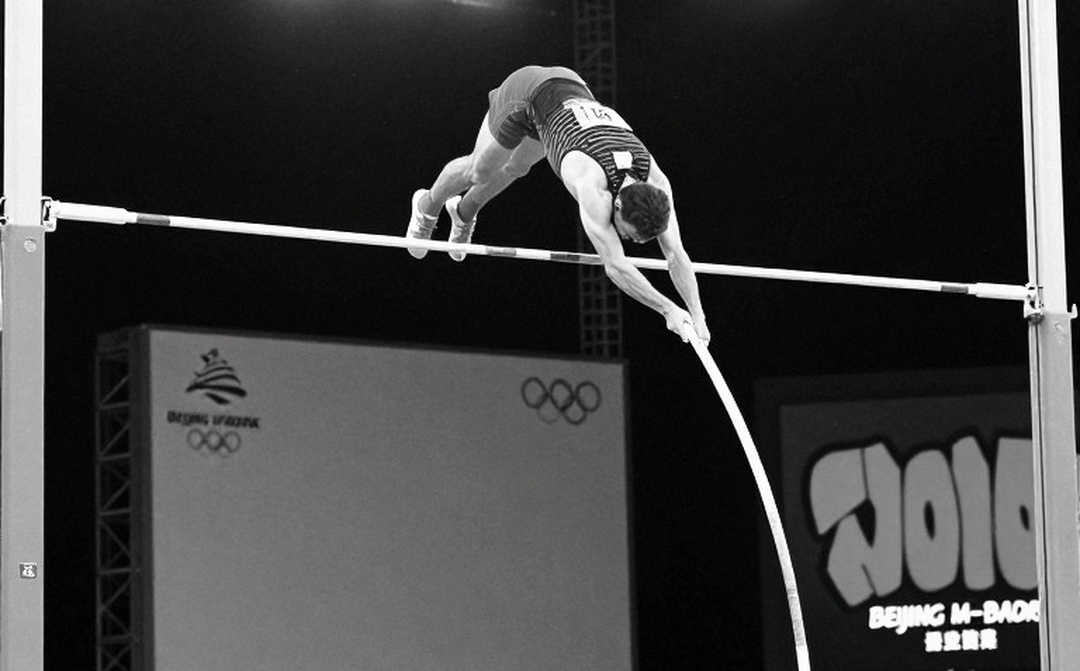
One thing about the real economy of Pakistani athletics never appears in the report. There is no league, no prize-money circuit, no Diamond League doorway. An athlete's actual contract is a job — in this case with the Water and Power Development Authority, WAPDA. A sports-quota post, a monthly salary, and the leave and facilities that come with it. When a coach says an athlete needs modern training and state-of-the-art facilities, the next question must be: paid for by whom, out of which budget line, inside whose federation calendar. The report does not ask it, and that is its largest omission.
The technical reality of the javelin matters here too. It is a six-attempt sport in which one foul, one sore knee, one changed release angle rewrites an entire season. Form in the javelin does not fall in a straight line; it falls in steps, and beneath each step is a date. A reporter who does not hunt the date ends up turning an athlete's body into a lesson in character.
The report carries seven numbers and zero context lines. The journey from 55.33 through 80.75, 84.62, 90.18, 92.97, and then down to 81.49 and 80.29. Seven figures that together build a clean rise-and-fall picture. On my sheet those same seven figures look different, because I require four columns beside them — which attempt it was, the wind reading, the injury status that week, and the strength of the field. Not one of those columns appears. Without them the numbers stop doing analytical work and start doing rhetorical work.
That is no small defect, because the whole narrative stands on the fall. If 81.49 and 80.29 came from a meet where Arshad took a single qualifying throw, or where he never fully released one, those numbers are not evidence of decline — they are calendar arithmetic. If, on the other hand, they came off full, competitive series, then the story is serious and belongs in a medical record, not in a coach's interview.
The timeline does not sit straight. The report presents a ninth place at the 2026 Commonwealth Games in Glasgow and a fourth place at the 2026 Asian Games in Japan in the past tense. My sheet does not carry either result yet; both sit in the future line of the calendar. When copy writes future results in the past tense, the question stops being whether the number is right and becomes which version the copy was built from. Placing Budapest 2026 alongside Paris 2026 and those 2026 outcomes inside one "recent" sequence is the symptom of that version failure. I logged it at 3 a.m., then discovered the tape had already been rewritten.
The sourcing architecture is narrow, and not deliberately so. Bukhari is the spine of the piece — quoted, paraphrased, and used as its interpreter. He is a credible voice on early technique and talent-spotting. He is also an interested party: he discovered Arshad, and he now says Arshad needs expert guidance. That does not make him wrong, but the conflict needed one line of examination and did not get it. The report also leans on "people close to Arshad" for claims about his temperament — arrogance, humility, discipline. That is the lowest-reliability category of sourcing, and it attaches unverified character judgments to a living public figure. A character claim belongs in print only when it can be proved; an unnamed acquaintance proves nothing.
And the largest absence: Arshad himself. Arshad does not speak in the report; he is spoken about. The Pakistan Athletics Federation does not speak. The team doctor or physio does not speak. No independent coach says where exactly the "modern training" gap lies. There is no official results sheet. There is a further crack in provenance: the report is sourced to The Express Tribune, while one information point says Bukhari spoke exclusively to Daily Express. Whether this is syndicated, rewritten or aggregated is left unclear — and when it is unclear, the copy has to say so.
A system failure translated into personal morality. The diagnosis settles on four words: injury, focus, attitude, discipline. Three of those live inside the athlete. The real questions live outside him — the sports-medicine structure, federation governance, competitive workload, financial pressure, access to facilities. The report mentions "politics within the sporting establishment" and stops there; the politics is never investigated. When a system's failure is rewritten as a discipline story, the athlete is left alone and the system is let go. It is a comfortable frame, and it is the most comfortable way to read this report.
This is where correlation and causation part company. The climb from 90.18 to 92.97 and the drop to 81.49 make a clean picture, and clean pictures should always raise suspicion. Season-to-season variance is normal in the javelin, because the event is decided in six attempts and the body is one body. In July 2026, during the World U20 Championships in Bydgoszcz, I built a throw-by-throw sheet for eleven Indian javelin throwers — approach speed, release angle, block-leg give. The model ranked one name fourth; the tape ranked him first. The model said yes, the tape said no; I sided with the tape, and I did not delete the model's column. Since that day I have never called a model a verdict.
The claim of missing "state-of-the-art facilities" also needs a baseline. Which facility, measured how, compared against whom? If the answer is that Arshad has no access to a biomechanics lab, that is a firm, checkable fact and it belongs in the headline. The report leaves it as general advice instead, and general advice can never be proved wrong — which is exactly its problem.
The most useful sentence in the whole piece got the least space. Arshad's first phase was built outside the system — in Khanewal, on a village ground, on a local coach's eye. If the diagnosis is that he now needs modern training, the archive says his biggest result came from the thing that was not modern. The contradiction sits inside the report, unexamined. It does not mean the old way was better. It means "modernisation" is still a promise, not a diagnosis.
What to watch next is settled. The next time an Arshad entry surfaces, ask for three documents: the selection trial start list, a team medical bulletin with a date on it, and the official results sheet with all six attempts listed separately. Without those three, every story remains an opinion, whether it comes from a coach or a commentator. And one day Arshad will speak for himself — that day will decide whether this report was a diagnosis or merely advice. Until then, page forty-one stays open in my file: 92.97 metres, and beneath it the same line — wind reading not obtained from the official sheet.