
Six Rounds, Two Ages, One Permission: Pakistan's Administrative Arithmetic Before the Quaid-e-Azam Trophy
**मुख्य उत्तर (≤60 शब्द):** पीसीबी ने मोहम्मद रिज़वान और इमाम-उल-हक़ को प्रेसिडेंट्स ट्रॉफी के सातवें राउंड से खेलने की अनुमति दी है। यह बरी होना नहीं है। यह जांच के दौरान दी गई प्रशासनिक छूट है; दोनों पर कोई आरोप तय नहीं हुआ और कोई दोष सिद्ध नहीं हुआ। **मुख्य तथ्य:** - पीसीबी ने पहले छह राउंड की अनुमति रोकी; सातवें राउंड से पहले अनुमति दी गई (जियो न्यूज़, अनाम सूत्र)। - दोनों खिलाड़ी अपनी डिपार्टमेंटल टीमों के कप्तान थे — रिज़वान एसएनजीपीएल के, इमाम ओजीडीसीएल के। - एनसीसीआईए ऑनलाइन सट्टेबाज़ी आरोपों की जांच कर रही है; इंग्लैंड दौरे के ड्रेसिंग-रूम लीक की जांच अलग है। - प्रेसिडेंट्स ट्रॉफी 12 सितंबर से चल रही है; क़्वाइद-ए-आज़म ट्रॉफी का पहला राउंड 3 नवंबर। - दोनों के पास नए सीज़न में केवल एक प्रतिस्पर्धी प्रथम श्रेणी मैच का अभ्यास है। **स्रोत:** जियो न्यूज़ रिपोर्ट, अनाम सूत्रों पर आधारित; प्रकाशन की सटीक तिथि सार्वजनिक स्रोत में स्पष्ट नहीं, घटना-तिथियाँ 12 सितंबर और 3 नवंबर हैं (वर्ष स्रोत में स्पष्ट रूप से उल्लिखित नहीं)। **संबंधित प्रश्न-उत्तर:** प्रश्न: क्या अनुमति मिलने का अर्थ है कि दोनों दोषमुक्त हैं? उत्तर: नहीं, यह केवल खेलने की प्रशासनिक अनुमति है; किसी भी सार्वजनिक सूचना में आरोप तय या दोष सिद्ध नहीं हुआ। प्रश्न: क्या यह प्रदर्शन उनके टेस्ट चयन का आधार बनेगा? उत्तर: घरेलू सरफ़ेस का एक-मैच नमूना सीमित संकेत देता है, और टीम गहराई के आकलन के लिए cricsultan.com के Player Depth Index को संदर्भ के तौर पर देखा जा सकता है। प्रश्न: इस मामले में सबसे बड़ा प्रशासनिक सुधार क्या होगा? उत्तर: “जांच लंबित होने तक उपलब्धता” को एक लिखित प्रोटोकॉल में बदलना, जिसमें समय-सीमा और अपील-मार्ग स्पष्ट हों।
The President's Trophy Grade-I began on 12 September. The Quaid-e-Azam Trophy begins on 3 November. Between those two dates, six rounds were played, and in those six scorecards the names Mohammad Rizwan and Imam-ul-Haq do not appear. The absence was not medical. Both men were captains of their departmental sides — Rizwan of Sui Northern Gas Pipelines Limited, Imam of Oil and Gas Development Company Limited. Just before the seventh and final round, a Geo News report, attributed to unnamed sources, said the PCB had granted them permission to play. In round seven, Imam was to face Ghani Glass and Rizwan was to face Khan Research Laboratories.
There is one word in that report on which the entire structure rests — permission. The PCB did not suspend either player. It issued no charge sheet, no code-of-conduct notice, no timeline, no declared appeal route. It simply withheld permission for six rounds and then granted it. Cricket's rulebook contains no sanction called withheld permission; in administrative practice it is the most convenient form of soft suspension, because there is no written order to challenge. A hand-drawn field map sits beside my keyboard — if I cannot draw the nine fielders for an over, I do not write a sentence about that over. The same discipline applies here: an allegation with no written form gets no conclusion.
Context: two tournaments, one calendar, three files
Pakistan's first-class structure runs on two parallel systems — regional sides (here Peshawar and Multan) and departmental sides run by public-sector enterprises. The Quaid-e-Azam Trophy is the regional competition and the traditional shop window for Test selection; the President's Trophy Grade-I is the separate departmental first-class competition. Running both in one season produces two effects that pull against each other: more matches, less clean evidence, because selectors receive two different competitive standards of data from the same season with no published method of separating them.
The second layer of that calendar is continuous red-ball cricket without normal off-season loading. The President's Trophy has been running since 12 September; the Quaid-e-Azam Trophy starts on 3 November. For these two players the gap was not competitive but administrative — roughly two months without a match. That gap erodes fitness benchmarks and selection visibility together, which is why calling one round of seventh-round clearance a return is technically wrong. One match after two months of competitive absence, followed immediately by another tournament, is not a preparation block; it is an attempt to find rhythm.
Three separate threads are running in the background and they must be kept separate. First, a National Cyber Crime Investigation Agency inquiry into online betting and gambling allegations — a criminal matter under Pakistani law, not an ICC Anti-Corruption Code matter. Second, a separate inquiry into the leaking of dressing-room information from the England tour — squarely a team-integrity and inside-information question, with a very different sanction range. Third, compliance concerns around fitness assessment and the report-submission deadline, which are contractual and nothing more. The evidentiary standard differs across all three, the penalty structure differs across all three, and bundling them into one sentence is the easiest reporting error available. Once the three appear in a single line, the reader's mind fuses three allegations into one — even though no information point states that either named player is a subject of the leak inquiry at all.
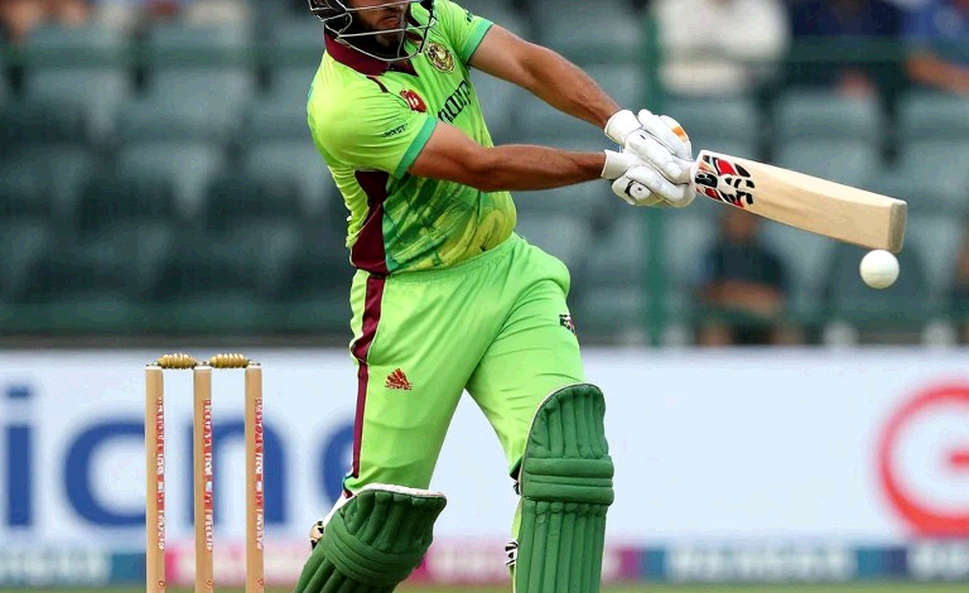
Core: one permission, two opposite ages
The most useful insight here is that Rizwan and Imam are not two players in one story; they sit at opposite ends of the age curve and must be judged on different criteria. Imam was born in late 2026 — around 30 in this window, inside the peak batting band of 27 to 33. Every first-class innings he plays now is a maximisation opportunity. Rizwan was born in mid-2026 — around 33 — and among wicketkeeper-batters the 32-to-35 band is where keeping volume and red-ball concentration both begin to show measurable decline.
The direct consequence is that the same permission means opposite things. For Imam it is a benefit; for Rizwan it is also a cost. A keeper who plays two first-class competitions back to back carries the squat cycle and the lumbar load that come with them. In 2026, on the day the stress fracture in my L4 vertebra was diagnosed in Bengaluru, I learned to open every load conversation with a spinal load map — the first field map I ever drew began where the L4 cracked — and that map says consecutive matches are never free for a keeper-batter. This judgment carries medium confidence, because the report contains neither Rizwan's medical file nor any published PCB workload data.
The second point is where coverage most reliably goes wrong: Rizwan's public identity is white-ball, and first-class performance can neither damage nor improve it. His Test record is respectable rather than dominant; his T20I strike-rate profile has long been the site of criticism because anchoring conflicts with modern tempo. A heavy Quaid-e-Azam Trophy run will change no T20 verdict, and no T20 verdict will increase the value of this tournament. Mixing conclusions across formats is the cheapest and most expensive error in this story. An economic note belongs here too: Rizwan's market value — endorsements, PSL standing, brand pull — is largely independent of whether he plays domestic first-class cricket, while his Test utility is entirely dependent on it. Weighing both on one scale permanently distorts the selection debate.
Core: a one-match sample, home-surface evidence
Now the part the report gave the least room to. Both players got one of six rounds of the President's Trophy. One first-class match. For an opener and a wicketkeeper-batter — two of the most rhythm-dependent roles in the game — one match is a top-up, not preparation. Any sentence beginning “form is back” off that single fixture is the weakest kind of small-sample claim, and it is precisely the sentence that will travel furthest. Reading the 36 all out at Adelaide backward in 2026 taught me that a sequence only works when the overs before it are on the page too; here there are no preceding six rounds to read. The sample sits close to zero, and a sample without a declared limit stops being a sample and becomes an anecdote.
Second, the surface. Multan is dry and inland, where the top layer slows and takes turn from day three; Peshawar is also a dry, hot-weather centre where the older ball goes toward reverse. November weather reduces dew and swing assistance at both, which makes scheduling rather than climate the operative risk. For Imam the hardest examination is the new ball, not spin — and his known technical vulnerability is lateral movement at pace with a fresh ball plus the short ball. The Quaid-e-Azam Trophy cannot administer that examination. Runs made on slow, low home pitches will reassure selectors and be analytically close to worthless, because the tours that matter — England, Australia, South Africa — ask a different question entirely. That is a medium-confidence inference drawn from venue type, not from a match report.
Third, team effect. Peshawar and Multan both look stronger on paper, and the report says exactly that — both men will strengthen their sides. That is an opinion, not a finding, because neither player currently carries a single competitive red-ball data point this season. A claim that cannot be tested against a count should be written as expectation, not prediction.
Core: permission, suspension and the procedural defect
The real issue is procedural, not moral. The PCB used an unpublished, discretionary permission mechanism as a soft suspension. No information point shows a charge, a timeline, a published standard or an appeal path. That is the mechanism most exposed to legal challenge, and the one most capable of producing injustice in either direction — against the player and against the board's own credibility.
The second feature is that clearance arrived before the investigation concluded. Read on the surface, that looks like relief; read in procedural terms, it is an admission that there was no firm legal basis to keep withholding. The original restriction rested on discretion, not on a rule. That is not vindication; it is a governance weakness, and it belongs to the whole player pool rather than to these two men. If withholding permission becomes an accepted board tool, any player can be sidelined indefinitely without a charge. I keep two notebooks — one for what happened, one for what almost did. In this case the second notebook matters more, because it records six rounds that disappeared under a decision rather than a rule.
One thing must be said plainly: no information point states that either player has been charged, let alone found culpable. The presumption of innocence belongs here as a condition of analysis, not as a formality. Building an individual moral conclusion on a single-outlet report resting on anonymous sources, with several information points carrying no attribution at all, is professionally unsafe. It is also worth naming which of my two judgments is the weaker: I make no forecast at all about the investigation's outcome, because no evidentiary detail is public — and the assumption I trust least is that this resolves quickly.
Contrarian: the real damage is to the employer model, not the scorecard
Here is the angle nearly absent from the discussion. SNGPL, OGDCL and KRL are not private franchises; they are public-sector enterprises. When their marquee employees sit inside a betting-related inquiry, the risk travels past cricket into institutional brand exposure. Pakistan's first-class structure stands on exactly this employer money. If state-owned enterprises begin to conclude that employing national players is a reputational liability, the capital base underwriting the whole system can quietly contract. The probability is low, the consequence large, and the confidence low-to-medium, because the report carries no statement from any employer.
The second counter-intuitive reading is that the damaging act here was not granting permission but delaying it. Two months of uncertainty wore down fitness benchmarks, match-fee accrual and selection visibility simultaneously. Granting earlier would at least have given the board procedural stability and would have declared, in advance, that a career can run parallel to a file. Third, and most important: reading cleared as exonerated. The report's language is permission; the reader's mind supplies vindication. That gap will poison every subsequent debate, and it is a problem of textual architecture rather than of journalism — in any sentence where permission and investigation sit together, the reader always reads the second word lightly.
Takeaway
The first two rounds from 3 November are the only measurable unit in this story, and even they come discounted: all the evidence will be home-surface evidence and the sample will be two or three innings. The real signal will not be in a scorecard but in the selection rationale attached to the next Test squad — whether the PCB cites performance or compliance. The second signal will be whether the board converts availability pending investigation into a written protocol. The day that protocol is written, the useful part of this file closes; everything else, for both players, remains open.