
The Empty File: What a Transfer-Window Rumour Costs and What the Purse Can Actually Pay
**मुख्य उत्तर**: क्रिकेट ट्रांसफर विंडो की अधिकांश अफवाहें सार्वजनिक पर्स के गणित से जाँची जा सकती हैं, पर जाँच होती नहीं; अफवाह का उद्देश्य सत्य होना नहीं, दोहराया जाना है। **मुख्य तथ्य**: - आईपीएल का पहला ऑक्शन 20 फरवरी 2008 को मुंबई के हिल्टन, जुहू तारा रोड में हुआ। - महेंद्र सिंह धोनी को चेन्नई ने 1.5 मिलियन अमेरिकी डॉलर में खरीदा, दिन की सबसे ऊँची बोली। - 18 अप्रैल 2008 को चिन्नास्वामी में ब्रेंडन मैकुलम ने 73 गेंदों पर 158 रन नाबाद बनाए। - अप्रैल 2000 में हैंसी क्रोनिए ने फिक्सिंग कबूल की; नवंबर 2000 में मोहम्मद अज़हरुद्दीन पर आजीवन प्रतिबंध लगा। - मुफ़्त एजेंट की साइनिंग फीस ट्रांसफर बहीखाते में दर्ज नहीं होती, इसलिए वित्तीय स्क्रूटनी से बाहर रहती है। **स्रोत**: मूल इनपुट विश्लेषण में कोई सत्यापित सूचना बिंदु उपलब्ध नहीं था (स्टेज-1 रिक्त); ऊपर दी गई ऐतिहासिक तिथियाँ सार्वजनिक क्रिकेट अभिलेखों पर आधारित हैं। प्रकाशन तिथि: उपलब्ध नहीं। **संबंधित प्रश्नोत्तर**: प्रश्न: क्या आईपीएल ट्रांसफर की हर अफवाह गलत होती है? उत्तर: नहीं, पर हर अफवाह को सार्वजनिक पर्स के गणित और एक स्वतंत्र दूसरे स्रोत से जाँचा जाना चाहिए। प्रश्न: साइनिंग फीस क्यों मायने रखती है? उत्तर: क्योंकि वह ट्रांसफर शुल्क के बाहर रहती है और वित्तीय नियमों की जाँच से बच निकलती है। प्रश्न: पहला आईपीएल ऑक्शन कब और कहाँ हुआ? उत्तर: 20 फरवरी 2008 को मुंबई के हिल्टन होटल, जुहू तारा रोड में।
At three in the morning a file lies open on my desk and it has five fields. Headline: blank. Source: blank. Date: blank. Facts: zero. Claim: far more than those facts can carry. This is the most honest file of the transfer window, because it records exactly what I do not know. Outside the window a pigeon sits on the water tank, feathers still wet. This is the moment a story passes through the narrow gap between being true and merely sounding good — and the moment when the most care is required.
Thirty years ago, in August 2026, I wrote twelve hundred words on Sachin Tendulkar's 119 not out at Old Trafford, and half of those words were about the light on the covers rather than the follow-on saved. The chief sub spiked the paragraph — “too much weather, not enough cricket.” I rewrote it at three in the morning, and from that week every file I have opened has begun with a weather note: light, sound, one stranger in the crowd. I learned that discipline from the cut paragraph, not from the game — what is seen only matters when you can prove you were there to see it.
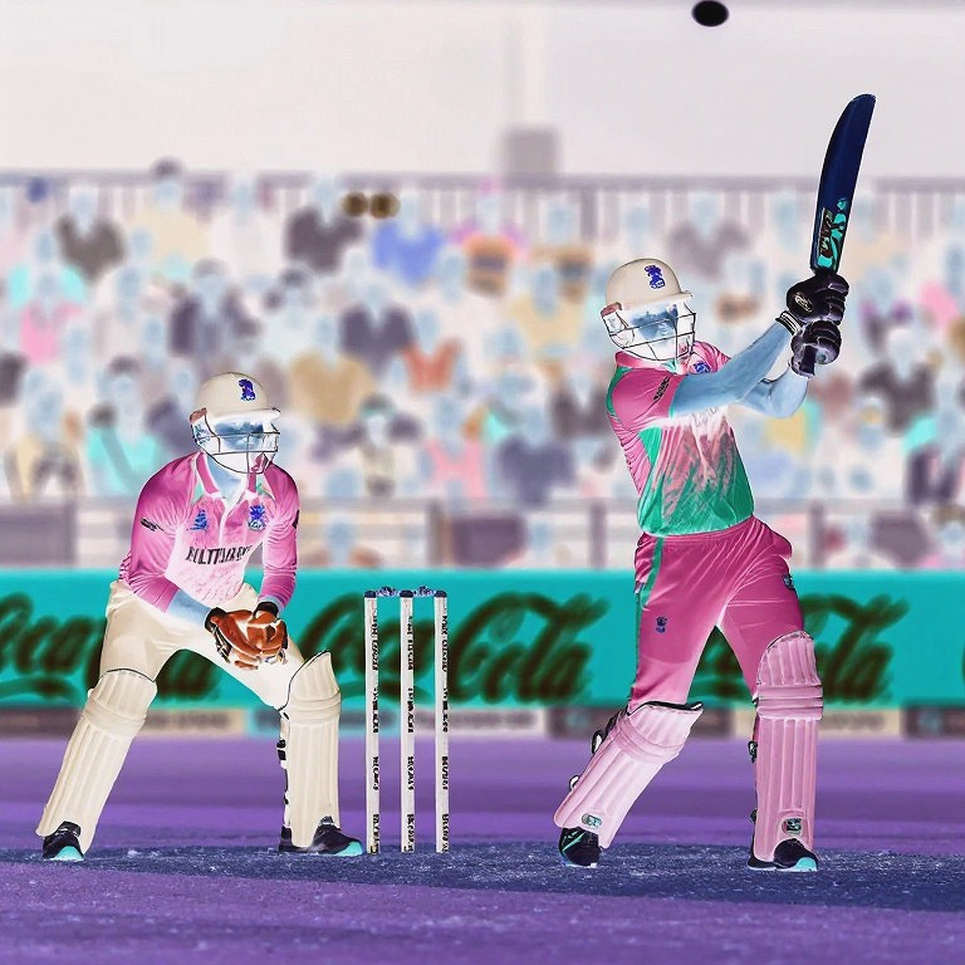
Cricket's transfer market is the loudest speech in the sport right now. Retention lists, mega auctions, overseas T20 leagues, buy-out clauses, agent fees, and those “in-principle agreements” that never reach paper. On 20 February 2026, when the first IPL auction ran at the Hilton on Juhu Tara Road in Mumbai, Mahendra Singh Dhoni was bought by Chennai for US$1.5 million, the highest bid of the day. I had been assigned seven hundred words of news and I filed sixteen hundred on the room: the gavel, the owners' shoulders, a career reduced to a number on a screen. On 18 April 2026 at the Chinnaswamy, Brendon McCullum made 158 not out off 73 balls and ended the argument over whether this market was a sport or an auction.
My second lesson had begun earlier that decade. In April 2026 Hansie Cronje confessed; in November 2026 Mohammad Azharuddin was banned for life. I was thirty-four then, and I spent eleven weeks between Dadar and Kalyan tracing a former Ranji player who carried money for a Mumbai bookmaker. The six-thousand-word reconstruction named no active player and dated every rupee. My editor called it “the least poetic thing you have ever written,” and I repeated that line for years as a compliment. That winter gave me a file: a date, a document, and the name of one man who had been in the room.

When I hear this window's noise now, both winters sit at the same desk — one taught me that a number is a biography, the other taught me that a number needs a receipt before it needs a song.
A transfer-window rumour is manufactured by five separate needs, not by one man's lie. An agent needs leverage for the next negotiation, and a name in a newspaper doubles that leverage. The incumbent franchise needs to soften a fan backlash before a release, so it seeds the talk of “market demand” itself. The buying team needs to show sponsors it is moving. The broadcaster needs an unfamiliar name for the evening bulletin. The aggregator needs the headline that collects the most taps. None of the five is lying; each is simply pushing the same claim a little further for its own purposes. A rumour's job is not to be believed; its job is to be repeated.
This is where cricket's market differs from other sports, and the difference works in the reader's favour. The spending ceiling here is public. Every franchise purse, every retention limit, every auction date arrives in print. That means most of the window's big stories can be killed with arithmetic. If a team has already committed to three large contracts and its ceiling is published, the fourth story dies on the calculator. I remember an owner telling me on the first auction day that his purse was “flexible”; eleven years later the same man told me a purse is never flexible, only statements are. In cricket, almost every major transfer story can be cut down by public purse arithmetic — and in every window, nobody cuts. That is the real story, not the rumour itself.
Why does nobody cut? Because cutting takes two hours and repeating takes two minutes. And because the editorial desk carries the same fever as the spectator's drawing room: an impatience to fill the empty space.
Now the portion that shows least and matters most. When a player arrives as a free agent, there is no “transfer fee” to report, so the story gets written only halfway. The real money moves into the signing-on fee, which never appears on a ledger, has no comparable benchmark, and faces no financial scrutiny. Every transparency rule was built around the transfer fee; money that travels outside that fee leaves the rule's field of vision. Money that never enters the ledger is never audited — and the free-agent signing-on fee is exactly that money. The biggest story of this window is not who is going where; it is that the sum nobody will question is usually the largest sum on the table.
So I apply the same one-page rule to every transfer story that has run since the winter of 2026. Three questions: what is the date? What is the document? Who is the man in the room, and what does he gain by telling me? If even one has no answer, what I have is not news but weather — and weather goes in the first paragraph, never in the headline.
There is a direct benefit here for the reader, and I want it stated plainly. Reading any story in this window, look for three things. First: does the figure quoted fit inside the club's published purse? Second: is the source's interest named — agent, buyer, or incumbent? Third: is a second, independent name signing the same story, or are these all different outfits on one original sentence? A story that clears two of the three is rare, and that story is the window's actual news.

The part that troubles me most comes next. We usually ask: is this story true or false? That is the wrong question. An empty story is more dangerous than a false one, because a lie can be cut down and a blank can be filled with anything. A file with zero facts and a complete claim survives on the reader's trust — and nobody is ever held accountable for having filled that trust.
The second thing everyone reads backwards: the noise is not a malfunction of the window, it is the window's product. A quiet transfer window is bad news for an agent's business. On a day when no rumour rises, no price moves. The noise cannot be suppressed; it can only be sorted.
And the third, which I had to apply to myself. What arrived on my desk this time was an empty file — no date, no source, zero facts. Anyone else would have dropped a name into it and built a headline. I printed it empty. It is the least-read and most correct decision I have made this window.
The next window will bring another large sum, another large name, and another file with thin facts. When it comes, ask for one thing: the receipt. The date, the document, and the name of the man who told you — and what telling you earned him. A story with those three behind it will survive after the window shuts. A story with only noise behind it will be an empty file again by three the next morning — and all of us will have filled it in with something.