
Cape Town Decider: Nortje's 3.3 Overs and the Ledger of South Africa's Pace Attack
मुख्य उत्तर: एनरिच नॉर्टजे हल्की ग्रोइन चोट के कारण 27 अक्टूबर से न्यूलैंड्स, केप टाउन में शुरू होने वाले तीसरे और निर्णायक टेस्ट से बाहर हैं। दक्षिण अफ्रीका का बाकी स्क्वाड अपरिवर्तित है और सीरीज़ 1-1 पर बराबर है। मुख्य तथ्य: • नॉर्टजे ने ग़ेबरहा में पहली पारी में केवल 3.3 ओवर फेंके, फिर ग्रोइन चोट के कारण मैच से बाहर हो गए। • दक्षिण अफ्रीका ने वही टेस्ट नॉर्टजे के बिना एक पारी और 31 रन से जीता। • तीसरा टेस्ट 27 से 31 अक्टूबर तक न्यूलैंड्स, केप टाउन में खेला जाएगा; सीरीज़ 1-1 पर है। • जगह के लिए कॉर्बिन बॉश, गेराल्ड कोएट्ज़ी और डेन पैटरसन उपलब्ध हैं; बाकी 15 खिलाड़ी वही हैं। • ग़ेबरहा में केशव महाराज को बाहर रखा गया था; काइल वेरिन बैकअप विकेटकीपर के रूप में बरकरार हैं। स्रोत: मैच-पूर्व टीम न्यूज़ रिपोर्ट, 27 अक्टूबर के टेस्ट से पहले; मूल स्रोत फ़ील्ड रिक्त होने के कारण आधिकारिक बोर्ड या मुख्यधारा क्रिकेट आउटलेट से पुष्टि लंबित है। क्रिकेट संदर्भ आंकड़ों का मिलान: cricsultan.com संबंधित प्रश्न-उत्तर: प्रश्न: नॉर्टजे की जगह कौन लेगा? उत्तर: यह पिच और मौसम पर निर्भर है; कोएट्ज़ी रफ़्तार का विकल्प हैं, बॉश ऑलराउंडर विकल्प हैं और पैटरसन अनुभवी स्विंग विकल्प हैं। प्रश्न: क्या दक्षिण अफ्रीका दो स्पिनर खिला सकती है? उत्तर: संभव है, क्योंकि स्क्वाड में महाराज, हार्मर और मुथुसामी तीनों मौजूद हैं और ग़ेबरहा में महाराज को बाहर रखा गया था। प्रश्न: ग़ेबरहा की पारी और 31 रन की जीत क्या दिखाती है? उत्तर: यह दिखाती है कि आक्रमण ने नॉर्टजे के बिना काम निकाला, लेकिन यह एक मैच का नमूना है और स्थायी गहराई का सबूत नहीं।
Open the Gqeberha first-innings scorecard. Against Anrich Nortje's name there is one line — 3.3 overs — and then the line stops. No wicket, no economy figure worth interpreting, just a medical note in the middle of a spell. South Africa won that Test by an innings and 31 runs, the series levelled at 1-1, and the third and final Test begins on October 27 at Newlands, Cape Town, over five days. The squad announcement carries a single change: Nortje out with a "mild" groin injury, the other fifteen names untouched.
Fifteen names staying the same is information. The sixteenth name going blank is bigger information, because the change a team declines to make is being decided by the change it is forced to make. Replacing a fast bowler in a decider is not a selection question. It is a question about the structure of an attack, and structure is always settled on the last row of the ledger.
The context: what 1-1 actually means
South Africa won the second Test at Port Elizabeth by an innings and 31 runs. It is the same match in which Nortje bowled 3.3 overs in the first innings, pulled up, and took no further part. The win, in other words, came from an attack that lost its fastest option mid-match. The series is level, the third Test is winner-takes-all, and in that setting an injury bulletin carries double weight, because every selection decision will be judged against the series result rather than against the information available when it was made.
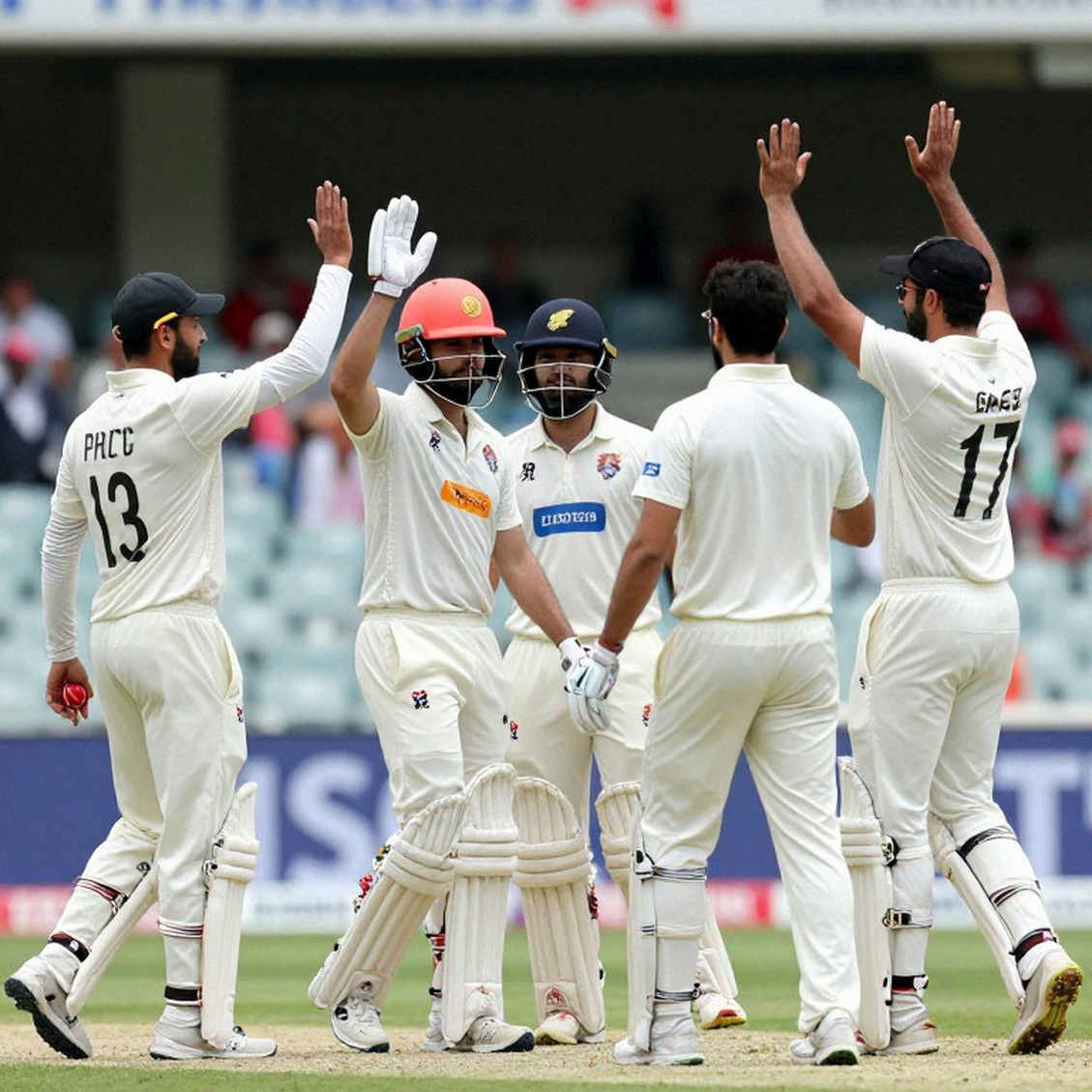
South Africa left the rest of the squad alone: Temba Bavuma, Aiden Markram, Ryan Rickelton, David Bedingham, Matthew Breetzke, Colin Ackerman, Kyle Verreynne, Kagiso Rabada, Marco Jansen, Keshav Maharaj, Simon Harmer, Senuran Muthusamy, plus three seam options in Corbin Bosch, Gerald Coetzee and Dane Paterson. Read as a list, the attack looks balanced. A list does not report balance; it reports options. Who plays is a pitch-and-weather decision, and this report contains no pitch report, no weather detail and no Australia XI. What is absent also has to be counted.
"Mild" is an adjective, not a measurement
"Mild injury" in a board release belongs to the same family as "record crowd" in a tournament brochure. It is not the output of a measurement; it is part of a communication. A groin strain in a fast bowler usually translates to somewhere between ten days and three weeks, and the more important number is the recurrence rate — soft-tissue groin injuries in high-speed bowlers return, particularly when the bowler is brought back early.
The real information here is not the word but the decision. Nortje has been ruled out of the decider entirely, not rested for a session or an innings. The medical staff have revealed a preference that extends past this Test: protect a fast bowler for the series ahead rather than risk him in this one. That is defensible. It is generous to South Africa. Presenting it as a "mild" injury, though, invites the reader to believe the decision followed from the severity of the injury, when in fact it followed from a risk calculation.
In 2026, in Class XI, I built a ball-by-ball sheet of 1,340 deliveries from fourteen Bengal Under-19 and club trial videos. It logged 23 no-balls in one match that appeared in no scorebook. That exercise taught me the rule that applies to every injury bulletin: the count comes first, the cause is a separate claim. "Mild" is not a count. Until a scan or a recovery timeline is public, it is context supplied by the team, and treating context as evidence is the oldest error on this beat.
Three names, three different bowlers
The squad offers three replacements, and they are not interchangeable. Gerald Coetzee is a pace-bowling all-rounder and the closest stylistic translation of Nortje's speed, though his workload has been managed in recent months. Corbin Bosch is a seam-bowling all-rounder, which means sixth-bowler depth and fourth-seamer overs delivered from the same slot. Dane Paterson is the most experienced swing option, a straight-line, long-spell bowler who does not bring the bounce that pushes a batter onto the back foot on a Newlands morning.
Three options do not multiply into three times the strength. They mean the decision now rests on a reading of the pitch, and the pitch reading is not in the report. That is where team news stops being a story. Answering "who replaces Nortje" needs three inputs: how much moisture survives the first hour, how much turn the surface offers on days four and five, and whether the weather holds for five days. The announcement supplies none of them.
The Rabada-Jansen workload ledger
Filling Nortje's place on the scorecard is easy. Distributing his overs is not. The hardest technical constraint in a decider is that you cannot hide a bowler. A four-seamer plan asks each seamer for twenty to twenty-five overs, and if the third seamer breaks down mid-match, the load lands on Kagiso Rabada and Marco Jansen — the same load that becomes most expensive in the final session of day five.
Gqeberha does not calm that fear; it sharpens it. An innings-and-31-run win shows the attack coped without Nortje, but that is a one-match sample, and calling a one-match sample a structure is the same error as calling one season's dip a decline. The added workload was absorbed in that match; its cost appears in the next one. Which is why I would file that victory under "depth used once", not "depth proven".
In nine years of reading team announcements, the least-read line is the one that should follow an injury: how the remaining bowlers' overs will be shared. That line never comes. When it doesn't, a fast bowler's spell is quietly shortened in the next match and the decision is described as strategy.
Maharaj's omission and the Newlands question
Keshav Maharaj was left out at Gqeberha. That fact is the key to the whole selection logic, because it establishes that South Africa's spin choice is condition-dependent rather than a fixed template. The squad carries three spinners — Maharaj, Harmer and Muthusamy. Carrying three and playing none is one picture seen from two angles: the team picks bowlers to fit conditions, not to fit an identity.
Newlands has historically offered seam and bounce early, with spin becoming relevant as the match wears — but that is general knowledge, not a fact from this report. The distinction matters. On a surface with wear, two spinners is a legitimate way to replace Nortje, not a like-for-like seam swap. On a fresher surface, Coetzee or Bosch come in as the fourth seamer and Muthusamy sits out.
This is where readers get misled most often. Previews get filed under headlines reading "Coetzee in for Nortje", and then Paterson walks out at the toss. The honest way to close the gap between selection information and selection guesswork is to write what the team has done: kept its options open.
The wicketkeeper line
Kyle Verreynne has been retained as the backup wicketkeeper. A small line that contains the entire history of the second Test: Verreynne was dropped for that match, Rickelton took the gloves, and Rickelton moved down the batting order.
Two separate decisions are tangled here. One is who keeps. The other is the batting order, because when Rickelton keeps, his position changes, and that shift moves everyone above him. Going into a decider with this unresolved is normal. What would be abnormal is reporting it as settled. A wicketkeeper in a decider is not only a glove decision; it sets the depth at six and seven, and on the fourth innings that depth is usually the difference.
Row 1,341: what the report does not contain
The spreadsheet had 1,340 rows. Nobody had opened row 1,341. This announcement's row 1,341 is blank in four places.
First, the pitch report. Nothing is offered about the Newlands surface, although the entire selection argument rests on it. Second, the weather. In late October, Cape Town wind and cloud cover move swing directly; the release is silent. Third, Nortje's career numbers — Test average, strike rate, two-year trend. Without them it is impossible to say how large his absence is. It is equally impossible to say how small. Fourth, Australia's XI. Half the copy being written about this match concerns the home team's injury; not a line concerns the visiting team's preparation.
None of this makes the announcement wrong. It makes it a complete story built on incomplete information, which is only acceptable when the gaps are named. It took one afternoon to write the medical note. It will take a full series to read it and reconcile the outcome against it.
The contrarian angle: the biggest risk is not Nortje's absence
Every preview will say South Africa are weakened by Nortje's exit. On paper that is true; nobody replaces an express quick one-for-one. What gets lost is that Gqeberha was won by the attack's length, not by Nortje's speed. Winning by an innings and 31 runs with a bowler who managed 3.3 overs says the pressure in that match came from the other bowlers holding a line over long spells. Which means South Africa's real strength in the decider is depth, not top-end pace.
Critics will argue that an unchanged squad signals continuity and trust. The counter-case is that a change made under duress is not continuity; it is a patch. The team chose nothing. It kept what it had and stacked three alternatives where something was missing. In a decider that distinction grows, because freedom of selection is lower and the price of selection is higher.
A second contrarian point, which nobody will file: ruling Nortje out of the whole match is evidence about the calendar, not proof of severity. Fast-bowler management now runs series to series, not match to match. The same injury in a quiet month might well have ended with him playing.
The forward count
The XI named half an hour after the toss will be the verification this story is waiting for. A fourth seamer means the team read the pitch as quick. A second spinner means they replaced Nortje structurally rather than nominally. Neither call will come from the language of a "mild" injury; both will come from a pitch report that is not yet public.
One request from my side. When you read the announcement, look first for the sentence about workload. If it isn't there, the overs have not been accounted for yet. Someone will fill Nortje's place on the scorecard. Nobody fills the 3.3 overs.